What hydro-jetting is, in one paragraph
Hydro-jetting is drain and sewer cleaning that uses a high-pressure water jet to scour the inside of a pipe back to its original diameter. You need it when a line keeps clogging, when grease or roots have built up on the pipe wall, or when a cable machine clears a hole but leaves the buildup behind. You can read more about it on our blog.
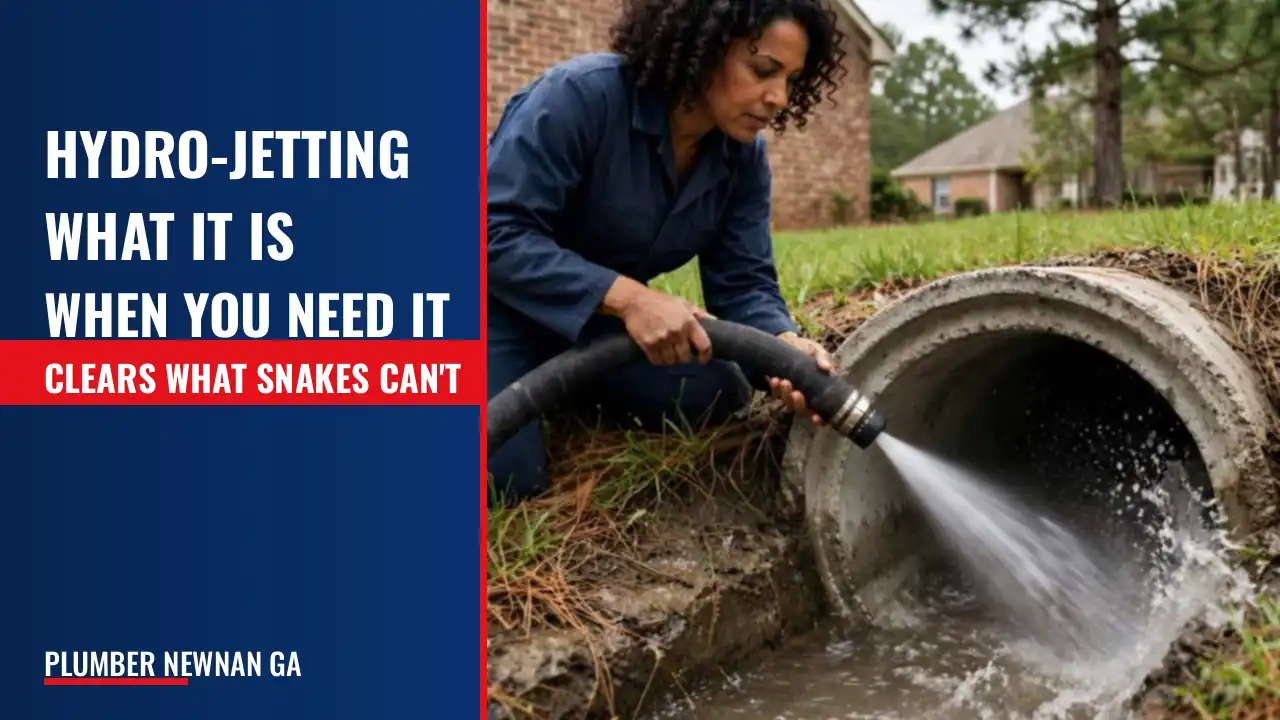
A plumber feeds a flexible hose with a forward and rear-facing nozzle into the line.
How does hydro-jetting actually clear a pipe?
Hydro-jetting clears a pipe by pushing water through it at high pressure from a rotating nozzle, so the force hits the full inside wall rather than only the blockage. The nozzle pulls itself down the line on its rear jets while the front jet breaks up the clog. The return flow carries the loosened material out.
This is different from a drain snake, which bores a channel through a clog. A cable can restore flow and still leave a ring of grease or a mat of roots on the pipe wall. Hydro-jetting scrubs that ring away, which is why a line that clogs every few months often stays clear longer after jetting than after cabling, as explained on our drain jetting page.
The pressure is matched to the pipe material. Older clay, cast iron and thin-wall pipe need lower pressure than modern PVC, and a plumber checks the line first. Jetting a fragile pipe at full pressure can crack it, so the condition of the pipe decides how the job is run.
When do you actually need hydro-jetting?
You need hydro-jetting when a drain or sewer line has repeat clogs, slow drainage across several fixtures, or a buildup that a cable cannot remove. One clog in one fixture is usually a local problem. The same line backing up again within weeks points to buildup on the pipe wall, so see our drain services.
Here are the signs that usually justify jetting rather than another cable run:
1. The same drain clogs more than once in a season.
What should I know before hydro-jetting is done?
Before hydro-jetting is done, the pipe should be inspected and its material and condition confirmed, because pressure that is safe in new PVC can damage older or weakened pipe. The plumber should also know where the cleanouts are and whether the line has a history of collapses.
Ask what the inspection showed and what pressure will be used. A camera inspection records where the buildup sits, whether roots have entered at a joint, and whether the pipe is intact. That record is what tells you whether jetting is maintenance or a stopgap before a repair.
Protect the area before work starts. Jetting pushes a lot of water and debris, and an old cleanout cap can fail under pressure. Move anything stored near floor drains and cleanouts, and expect some splash around the access point.
What can you do yourself, and what should you leave alone?
You can prevent most of what hydro-jetting removes by controlling what goes down the drain, but you should not attempt hydro-jetting yourself. Consumer pressure washers and store-bought drain bladders do not reach sewer-line pressure, and they can damage traps and older pipe.
What you can safely do:
1. Keep grease out of the kitchen drain. Wipe pans into the trash before washing.
Hydro-jetting becomes a job for a licensed plumber when the clog is in the main sewer line, when the pipe material or condition is unknown, or when the line has backed up more than once.
The reasons are practical. A jetter can cut through a root mass and also cut into a weak pipe if pressure is wrong. A plumber reads the camera first, sets pressure to the pipe, and knows when to stop and recommend repair instead. That judgment is the difference between cleaning a line and breaking it.
Call a professional rather than keep clearing the same drain if you see any of these:
What is hydro-jetting and when do you need it: questions answered
Here are the questions homeowners ask most about hydro-jetting, answered plainly.
What is hydro-jetting and when do you need it?
Hydro-jetting is high-pressure water cleaning of a drain or sewer line. You need it when a line has repeat clogs, slow drainage across several fixtures, or buildup that a cable cannot remove.
How does hydro-jetting and when do you need it work?
A flexible hose with a rotating nozzle is fed into the pipe, and high-pressure water scours the full inside wall and flushes debris out. You need it when the buildup is on the pipe wall rather than a single soft clog.
What should I know about hydro-jetting and when do you need it?
The pipe should be inspected first, because pressure that is safe in new PVC can damage older or weakened pipe. You need it when the line is structurally sound but coated with grease, scale or roots.
When does hydro-jetting and do you need it matter?
It matters when the same line keeps backing up and cabling only buys a few weeks. At that point, cleaning the whole pipe wall is what stops the cycle, provided a camera check shows the pipe is intact.