How a Grease Trap Separates Grease from Water
A grease trap is a box on the drain line where wastewater slows down. Grease, oil, and fat float to the top, solids settle at the bottom, and the clearer water in the middle flows out to the sewer.
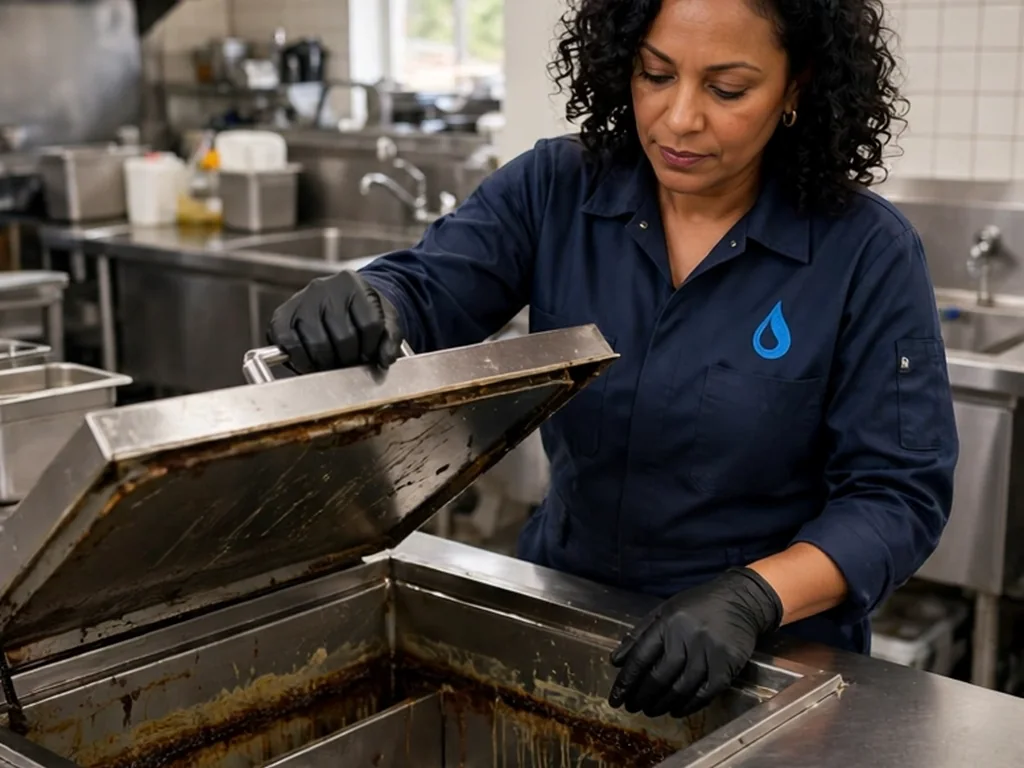
Over time the floating layer and the bottom sludge take up the space meant for water. When that happens, grease escapes into the line and clogs form downstream.
What Causes a Grease Trap to Fill Up
Cooking grease, oils, and food scraps are the main cause. Pouring grease down the sink, washing greasy pans without wiping them, and a lack of routine pumping all speed up the buildup.
A trap that is too small for the kitchen's use fills faster. So does one that has not been pumped on schedule, because the grease layer keeps growing until it blocks the outlet.
Safe Care Between Professional Cleanings
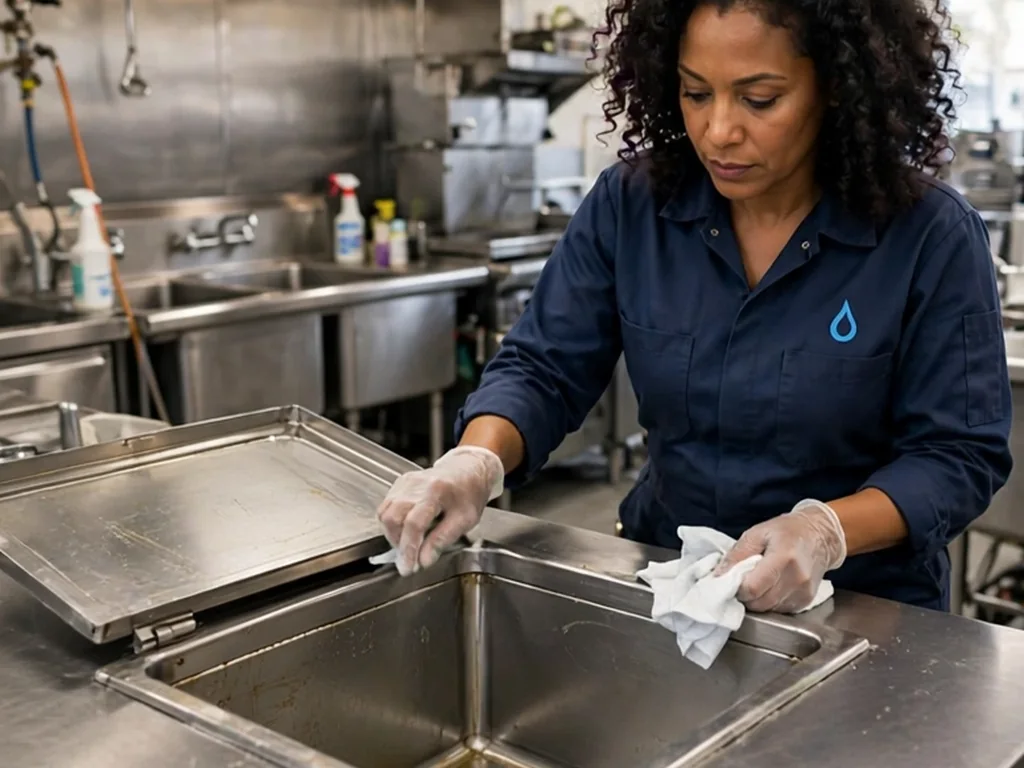
You can slow buildup by scraping plates into the trash, wiping greasy pans before washing, and never pouring cooking oil down the drain. These habits reduce how often the trap needs pumping.
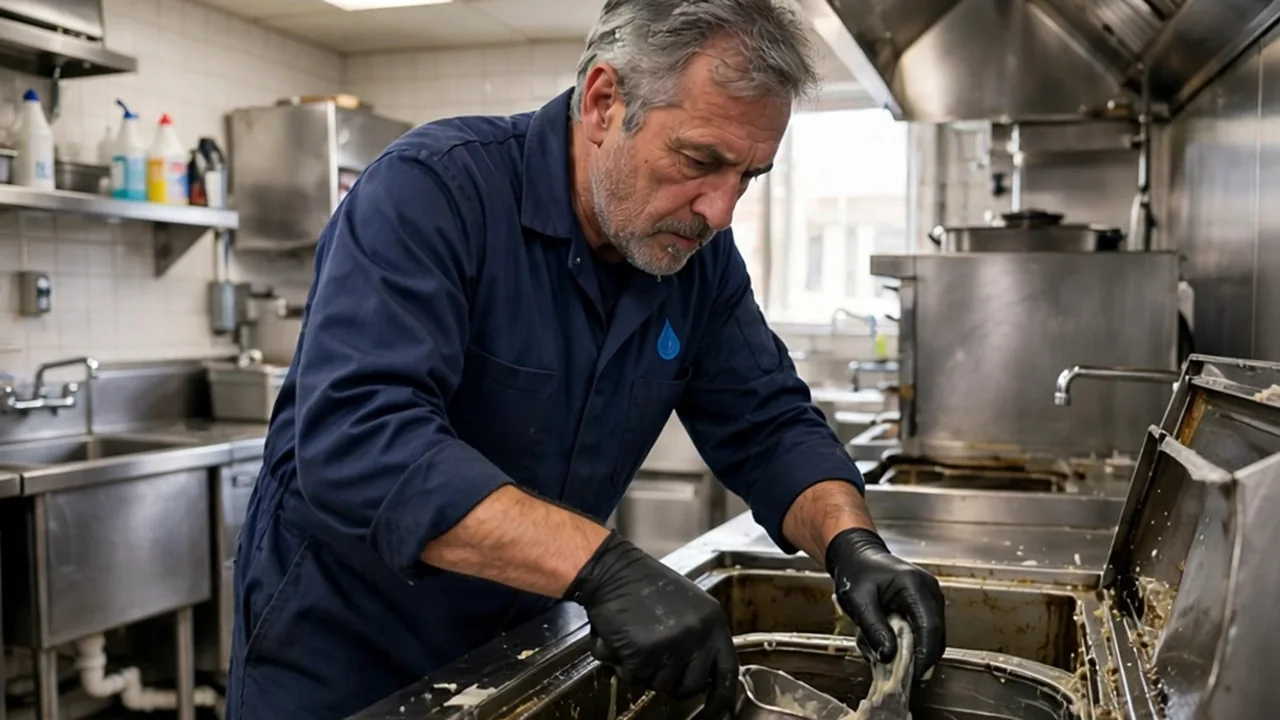
Do not open the trap or try to remove grease yourself. The contents can be hazardous, and a trap that is opened incorrectly may leak or fail. Leave the cleaning to a licensed plumber.