How a Tankless Unit Heats Water
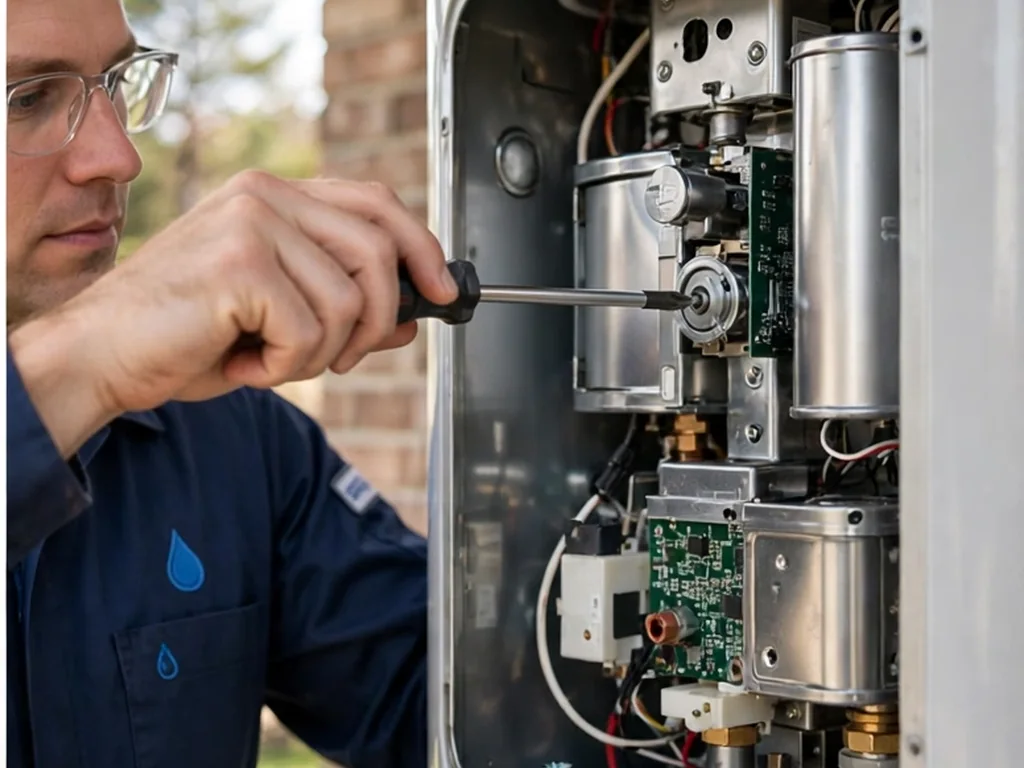
A tankless water heater heats cold water as it flows through a heat exchanger, using either natural gas or electricity. Because there is no stored tank of hot water, the unit provides continuous hot water and saves space, and it avoids the standby energy loss of a tank.
The trade-off is that scale buildup and a restricted flow sensor can reduce output. In Newnan's water, hardness can leave mineral deposits inside the heat exchanger over time, which is one reason maintenance matters.
Common Causes of Tankless Problems
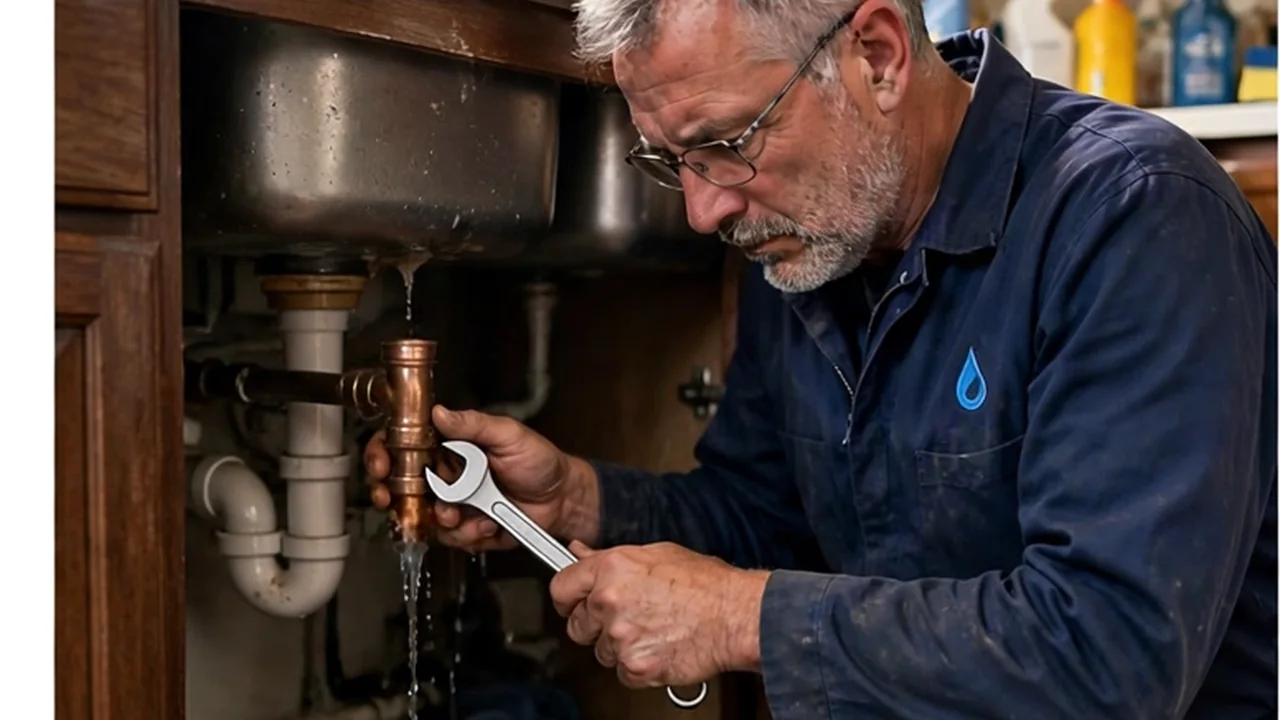
Inconsistent hot water often points to a clogged inlet filter or a failing flow sensor. A unit that shuts off mid-shower may be hitting a temperature limit or have a venting issue. Leaks usually come from a worn valve or a cracked heat exchanger.
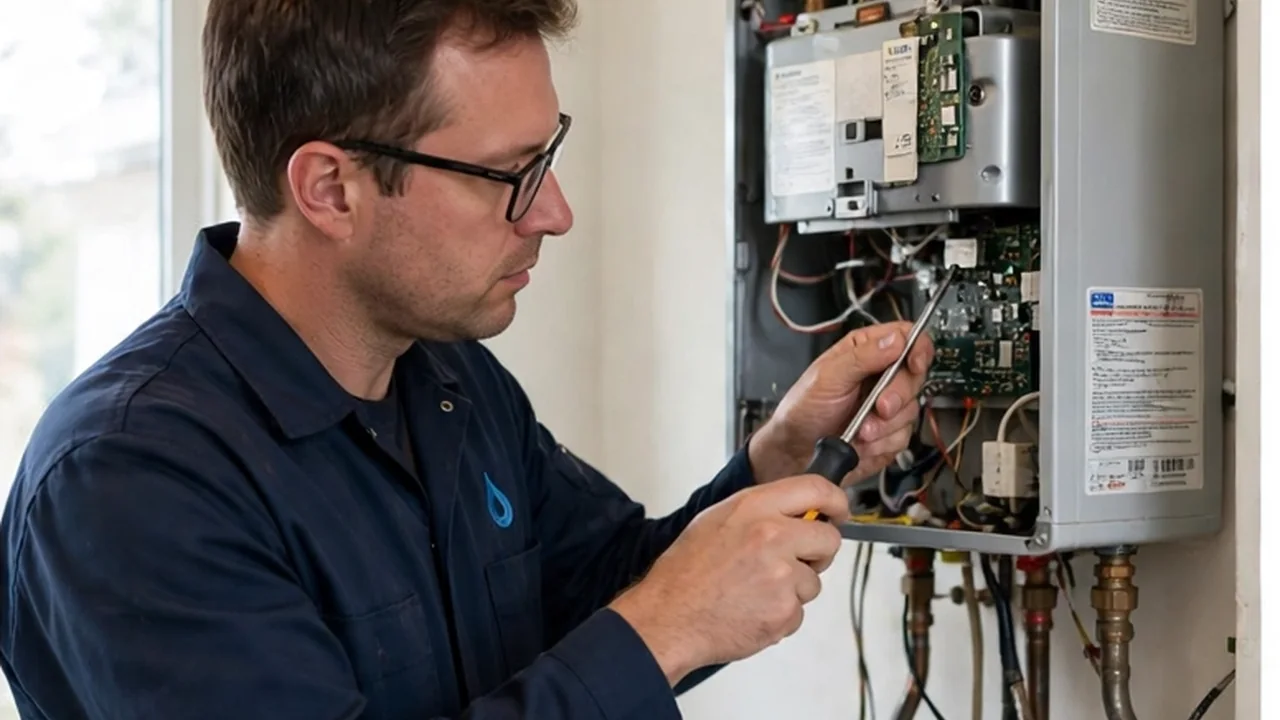
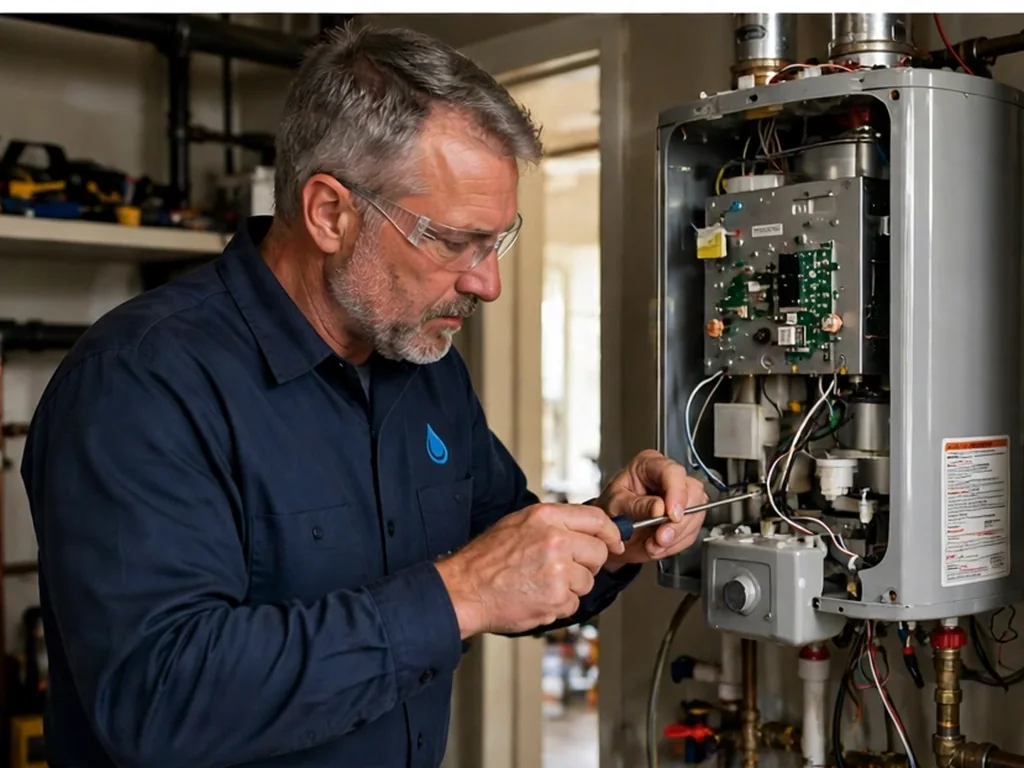
Ignition or error-code faults on gas models can involve the igniter, gas supply or control board. Electric models may trip a breaker or have a failed heating element. A licensed plumber can test each component rather than guess.
Repair or Replace: What to Weigh
Repair is usually the right choice when the fault is a single component, the unit is within its expected service life, and parts are available. Replacement makes more sense when the heat exchanger has failed, repairs have become frequent, or the unit no longer meets the household's hot-water demand.
For tank water heaters, age and tank condition drive the decision more often, since a leaking tank usually cannot be repaired. A guide on repair versus replacement explains the trade-offs for water heaters, pipes, drains and sewer lines. If your water is hard, water quality and scale failures are worth understanding too.