Why Kitchen Sinks Leak or Fail
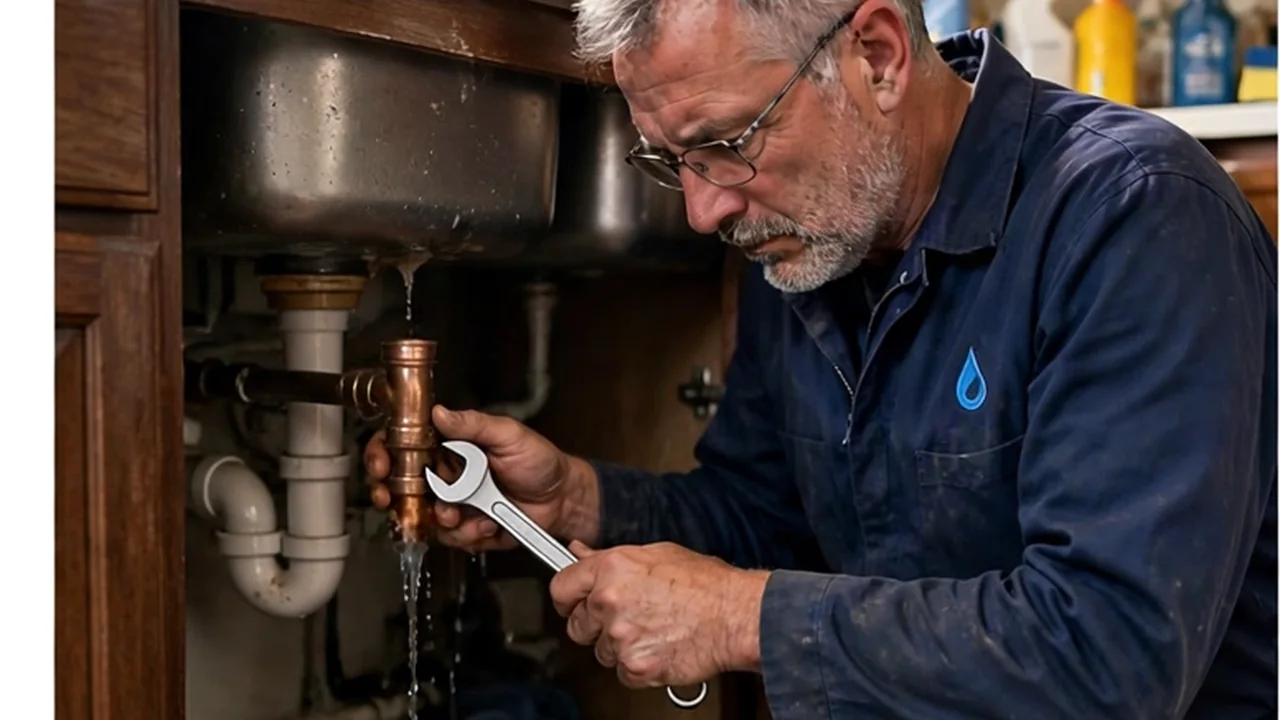
Most kitchen sink leaks start at the seals, not the basin. Worn plumber's putty under the drain flange, a cracked supply hose or a loose compression fitting lets water escape slowly, and the cabinet floor shows it before the sink does.
Older sinks also fail at the rim. A cast iron or composite sink can crack where the faucet mounts, and a stainless basin can separate from its undercoating, which lets condensation drip onto the cabinet base.
Repair or Replace: How to Decide
Replace the sink when the basin itself is cracked, rusted through or the wrong size for the cutout. Repair it when the sink is sound and only the drain, faucet or supply lines have failed.
A sink that has leaked into the cabinet long enough to soften the base is usually a replacement job, because the new sink needs solid wood to seal against. We check the cabinet before quoting either option.
What Homeowners Can Safely Check
You can tighten a loose supply connection by hand and clear a slow drain with a plunger. Shut the supply valves under the sink before you touch any fitting, and put a bucket under the trap first; if the problem persists, get in touch with us.
Do not cut into the cabinet, remove the sink clips or open a wall to reach a pipe. Those steps need a licensed plumber, and a wrong cut can turn a small leak into a cabinet rebuild.