
What does a plumbing diagnostic actually give you?
A plumbing diagnostic gives you evidence, not a guess: leak detection pinpoints where water is escaping, a camera inspection shows the inside of the pipe, and hydro-jetting both cleans the line and proves what the cleaning revealed. What you receive is a record of that evidence, usually photos or video of the line plus a written description of the fault and the repair options.
The value is that you can see the same thing the plumber saw and decide from facts rather than a description over the phone.
How does leak detection produce evidence?
Leak detection produces evidence by narrowing a hidden leak to a location instead of a general area. A plumber uses listening equipment, pressure testing, thermal readings or tracer gas to find where water is escaping, then marks the spot so the repair can be targeted. The evidence is the located point and the test that confirmed it, and you can read more about how we document it on our blog.
Leak detection matters most where the pipe is buried or under concrete. A slab leak, for example, can show up as a warm floor or a water bill that climbs with no visible drip, and the detection step is what separates a pipe fault from a fixture or appliance problem. The method chosen depends on the pipe material, the water pressure and whether the leak is on the supply side or the drain side. A supply leak holds pressure and often reveals itself under a pressure test; a drain leak only shows when water runs. That difference changes which tool is used and what the report can claim, so if you need a professional, get in touch with us.
How does camera inspection produce evidence?
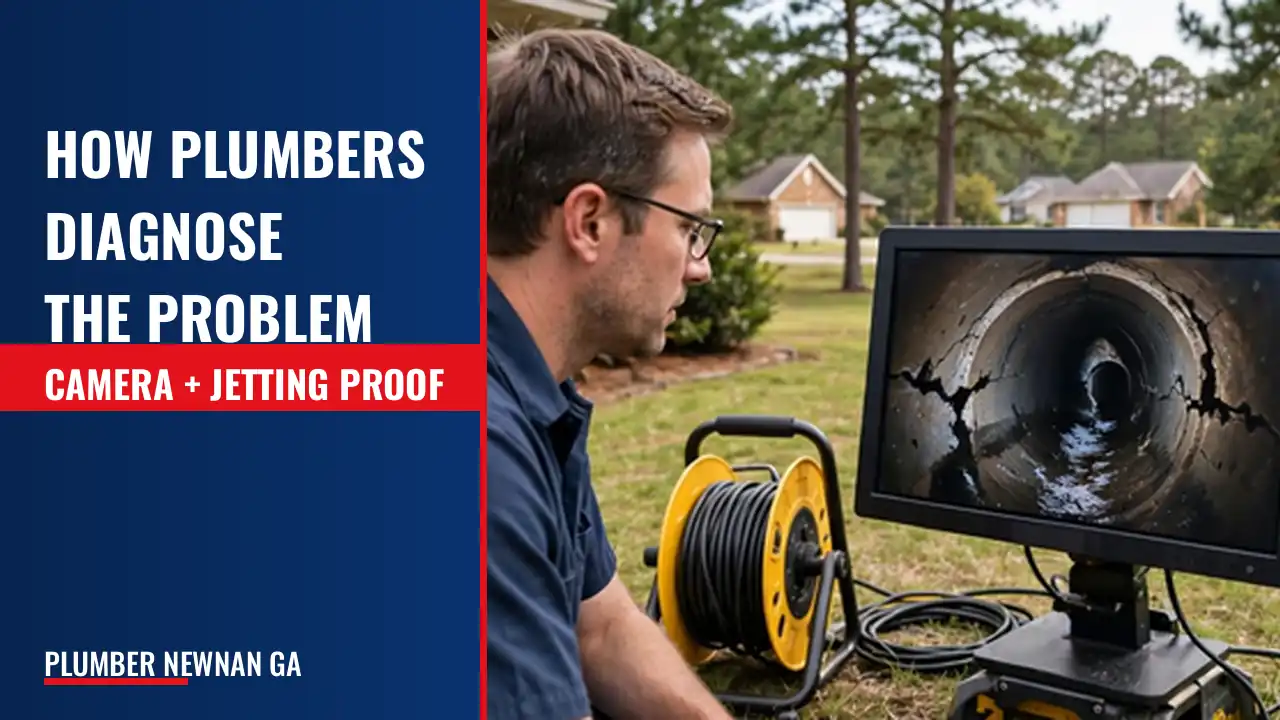
Camera inspection produces evidence as video of the inside of the pipe, recorded as the camera travels the line. The plumber can show you a crack, a root intrusion, a belly where water pools, a separation at a joint, or a build-up of grease and scale. The footage is the record, and it can be paused at the exact point of the fault.
A camera inspection is usually paired with a locator that marks the camera’s position above ground, so the video and the spot on your property line up. That is what lets a repair crew dig or line the right section instead of opening several. Camera inspection is most useful on drains and sewers, where the pipe is large enough to see into. On a small supply line it is rarely the first tool. The footage also shows condition beyond the immediate clog: if the pipe is cracked or collapsed, cleaning it will not fix it, and the video is what proves that. A plumber who inspects before and after cleaning gives you a before-and-after record you can keep.
How does hydro-jetting produce evidence?
Hydro-jetting produces evidence by cleaning the pipe to the wall and then showing what the cleaning exposed. A hydro-jet uses high-pressure water to scour grease, scale and roots from the line, and the flow and the camera view after cleaning tell the plumber whether the pipe is clear, partly damaged, or blocked by something that cleaning cannot remove. The evidence is the restored flow plus the post-cleaning inspection.
Hydro-jetting is not the same as snaking. A snake opens a hole through a clog; a jet washes the pipe surface. That difference matters because a line that keeps clogging often has a coating of grease or scale that a snake leaves behind. After jetting, the camera can see the actual pipe condition, which is the information you need to decide between another cleaning and a repair. A plumber should tell you the pressure used and whether the pipe material can take it. Older or fragile pipe may need a gentler approach, and that is a judgment call made on site, not a fixed rule.
What do you actually receive at the end of a diagnostic?
You receive a record of the evidence and a plain description of what it shows, not just a verbal opinion. Depending on the job, that means photos or video of the pipe, a marked location for a leak, and a written note of the test that confirmed it. The record should tell you what was found, where it is, and what the repair options are.
The form varies by job. A leak detection may produce a marked spot and a pressure-test result. A camera inspection may produce a video file or a set of stills. A hydro-jetting job may produce before-and-after footage. What matters is that the evidence is specific enough that another plumber could look at it and reach the same conclusion. Ask for the footage or photos to be kept or sent to you. A diagnostic that ends with only a price and no evidence leaves you unable to check the reasoning or compare options.
The report should also separate what is certain from what is likely. A camera may show a crack clearly; it may only suggest a joint is failing. A good report says which is which, because that difference changes how urgent the repair is.
What changes what the diagnostic finds and costs?
The main things that change a diagnostic are access, pipe material, and whether the problem is on the supply side or the drain side. A leak under a slab needs different tools from a leak in an exposed basement pipe, and a fragile drain line limits how much pressure a jet can use. Access is often the biggest variable: a cleanout near the problem makes camera work quick, while a line with no cleanout may need one opened first.
Pipe material changes both the method and the risk. Older metal drains may be scaled and brittle; plastic lines tolerate jetting well. Supply lines under pressure behave differently from drains that only carry water when a fixture runs. Water heater problems can also look like leaks: a tank water heater with a failing pan or a tankless unit with a blocked condensate line can put water where it does not belong, and the diagnostic has to rule those out before blaming a pipe. That is why a plumber may ask about the water heater, the softener, and recent work before choosing a tool. The diagnostic should match the symptom, not follow a fixed script.
What can you do yourself, and what should you leave alone?
You can safely gather information before anyone arrives: note where you see water, when it appears, and whether it changes with fixture use. Check the water heater pan and the supply connections you can see, and write down the water meter reading over a period when nothing is running. That record helps a plumber choose the right diagnostic and can save time.
Do not open walls or break concrete to find a leak, and do not run a camera or a jetter yourself. Those tools need training and the wrong pressure can damage a pipe. Do not ignore a gas smell or a sewer backup that reaches the house; those are professional jobs. If you are unsure whether a leak is supply or drain, stop using the fixture and call a plumber. For ongoing care, plumbing maintenance covers the checks that keep small issues from becoming diagnostics.
A diagnostic becomes a licensed job as soon as the problem is hidden, pressurized, or involves gas or sewer. Leak detection under a slab, camera inspection of a sewer line, and hydro-jetting all require equipment and judgment that a homeowner cannot safely substitute. A licensed master plumber carries the insurance and the training to open a line, test it, and stand behind the result.
The line is not about difficulty alone. A visible drip under a sink is a homeowner fix; a leak you cannot see, a drain that backs up repeatedly, or any work on a gas line is not. If a diagnostic finds a fault, the repair itself may also need a licence depending on the scope. Leak detection and slab leak detection are the services that carry these methods, and a related guide on how a plumber diagnoses a leak, clog, or failed system walks through the decision order.
Common questions about plumbing diagnostics
Here are the questions homeowners ask most about what a diagnostic involves and what they get back.
What is a diagnostic explainer showing how leak detection, camera inspection, and hydro-jetting produce evidence, and what the customer receives?
It is a walkthrough of the three main diagnostic tools and the record each one produces. Leak detection locates a hidden leak, camera inspection shows the inside of a pipe, and hydro-jetting cleans the line and reveals its condition. The customer receives the evidence: photos, video, a marked location, and a written description of the fault.
How does a diagnostic explainer showing leak detection, camera inspection, and hydro-jetting produce evidence, what the customer receives, work?
It works by matching the tool to the symptom and keeping the output. A pressure test or listening equipment finds a supply leak, a camera records the drain interior, and a jet clears the pipe so the camera can see the wall. Each step leaves a record the customer can keep and compare.
What should I know about a diagnostic explainer showing how leak detection, camera inspection, and hydro-jetting produce evidence, what the customer receives?
Know that the evidence matters as much as the repair recommendation. Ask for the footage or photos, ask which test confirmed the location, and ask what is certain versus likely. A diagnostic without a record is harder to check or compare.
Can I get a diagnostic without agreeing to the repair?
Yes. A diagnostic is a separate step, and you can receive the evidence and decide later. Some homeowners use the record to get a second opinion or to plan the work in stages.