
How a Plumber Diagnoses a Leak, Clog, or Failed System
A plumber diagnoses a leak, clog, or failed system by gathering evidence before touching a pipe: listening for water, metering pressure, running a camera through drains, and jetting only after the cause is known. The goal is to locate the problem and prove what caused it, so the repair fixes the source instead of the symptom. You can read more examples like this on our blog.
Diagnosis usually moves from the simplest test to the most direct one.
What Does a Plumber Actually Do During a Diagnosis?
A plumber during a diagnosis tests the system to find where it fails, then records what the test showed. Diagnosis is separate from repair: the plumber confirms the cause first, so the repair is aimed at the right part of the plumbing. In most homes this takes one visit for a leak or a water heater, and a second visit only when a camera or jetting is needed, and it falls under our plumbing maintenance services.
The work follows a simple order. The plumber asks what changed and when, checks the visible fixtures and the meter, then chooses a method that can prove the cause. A diagnosis that ends with a guess is not finished. A diagnosis that ends with a located leak, a photographed pipe, or a measured pressure is.
How Does Leak Detection Work?
Leak detection works by finding water where it should not be, using sound, pressure, and moisture rather than guesswork. A plumber first isolates the system by shutting off fixtures and watching the water meter; a meter that still moves means water is escaping somewhere in the supply line. That test tells the plumber a leak exists before any wall is opened.
The plumber then narrows the location. Acoustic listening picks up the sound of water escaping under pressure, and moisture meters or thermal readings show where a wall, floor, or ceiling is wet. For a leak under a concrete slab, the same evidence is used to mark the spot before any cutting. A water leak needs leak detection first because water travels along pipes and joists, so the wet patch is often not the leak.
Leak detection is the evidence step for leak detection and for slab work, where the location has to be proven before concrete is opened. A report or marked location is what the reader should expect to receive.
How Does Camera Inspection Work?
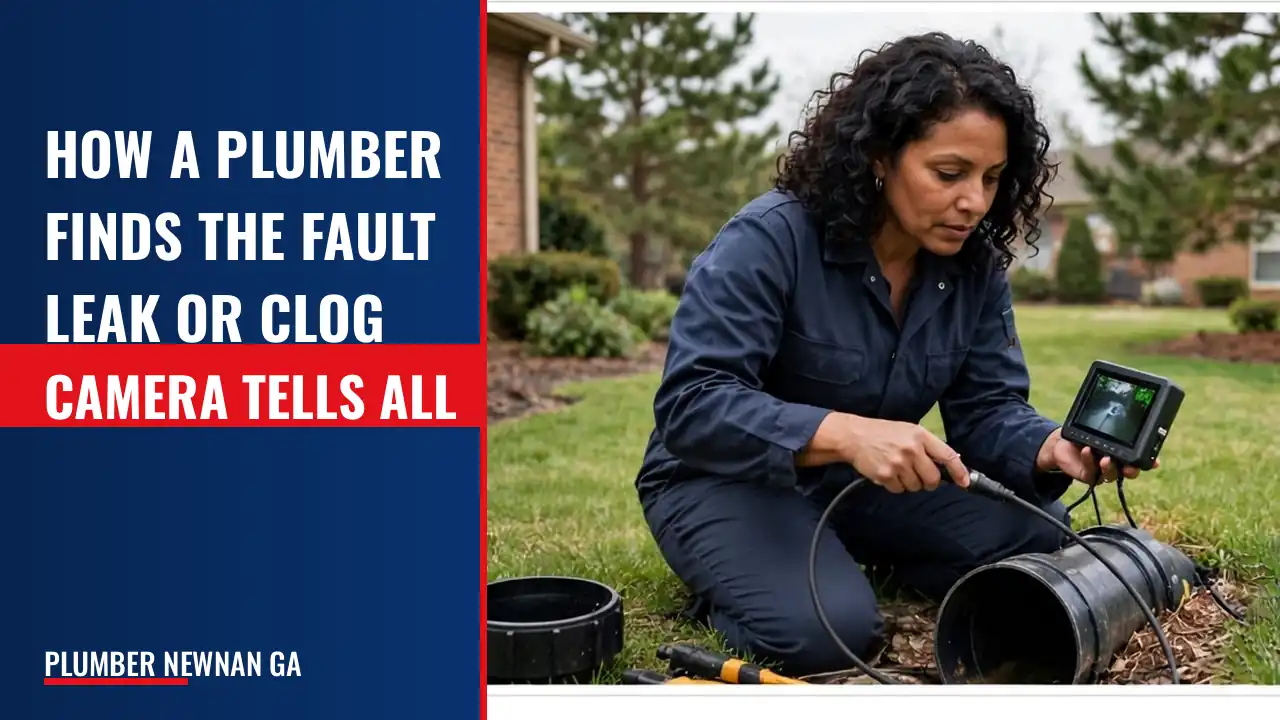
Camera inspection works by sending a small camera down a drain or sewer line so the plumber can see the inside of the pipe instead of guessing from the surface. The camera shows cracks, roots, grease build-up, bellies where water stands, and offsets where one pipe has shifted against another. The plumber watches the screen and marks the distance, so the repair crew knows where to dig or where to open a wall.
Camera inspection is used when a clog keeps returning, when a drain is slow in more than one fixture, or when a sewer smell or backup suggests a line problem. It is also the check after a repair, to confirm the pipe is clear. The footage is the evidence: it shows what the pipe looked like before and after, and it tells the reader whether the problem is a clog, a broken pipe, or a root intrusion.
How Does Hydro-Jetting Work?
Hydro-jetting works by pushing a high-pressure water jet through a drain to scour the pipe wall clean, rather than punching a hole through a clog. A plumber uses it after a camera inspection has shown what is in the pipe, because jetting a cracked or collapsed pipe can make the damage worse. The jet removes grease, scale, and roots that a cable cannot reach.
Hydro-jetting is the cleaning step, not the diagnosis. The diagnosis is the camera inspection that shows what needs cleaning. In most homes, jetting is used on main lines and commercial drains where grease and roots build up; a single slow sink often needs only a cable. The reader should ask what the camera showed before agreeing to jetting.
How Does a Plumber Diagnose a Failed Water Heater?
A plumber diagnoses a failed water heater by testing the water temperature, the pressure relief valve, the power or gas supply, and the tank itself. No hot water, water that runs out fast, or a tank that leaks at the base each point to a different cause. The diagnosis separates a repair from a replacement before any unit is removed.
A tank water heater that leaks from the shell is usually at the end of its life, while a failed element or thermostat can be replaced. A tankless water heater is checked for scale build-up and flow, because a tankless unit that stops heating often needs descaling rather than replacement. The plumber should explain which parts are failing and what a repair would and would not fix, so the reader can decide between repair and a new installation.
What Changes the Diagnosis?
What changes the diagnosis is where the problem sits and how long it has been running. A leak on a visible supply pipe is quick to locate; a leak under a slab or behind a wall needs detection equipment and may need a second visit. A clog in a single fixture is usually simple, while a clog in the main sewer line needs a camera before anyone can say what caused it.
Access changes the answer too. A clean-out near the street lets a camera and jet reach the main line easily; a house without one may need the line accessed from a roof vent or a cut in the yard. Age and material matter: older pipes may be brittle and need gentler cleaning. The reader should expect the plumber to say what the diagnosis depends on before quoting a repair.
What Can You Do Yourself, and What Should You Not?
You can safely check the water meter, look for visible moisture, test each fixture one at a time, and write down when the problem appears. These steps give the plumber useful evidence and cost nothing. You can also check the water heater’s power or gas supply and the temperature setting before calling.
You should not open walls, cut into a slab, or use a drain cable on a main line without knowing what is in the pipe. You should not ignore a gas smell or a leak near an electrical panel. A gas leak is a job for a licensed professional and the gas utility, not a homeowner repair. For anything beyond a fixture, the safe next step is a diagnosis by a plumber.
When Does It Become a Job for a Professional?
It becomes a job for a professional when the problem is hidden, recurring, or involves gas, sewer, or the main water line. A leak that returns after a patch, a drain that backs up more than once, or a water heater that leaks from the tank all need a diagnosis that only a licensed plumber can legally and safely perform. Plumbing repair at that level requires a licence and insurance, so get in touch with us.
A licensed master plumber carries the training to test a system and the insurance to stand behind the repair. The reader should ask for the diagnosis in plain terms and for the evidence: the meter reading, the camera footage, the marked leak location. That is what makes the repair a fix rather than a guess. The diagnostic explainer on this site shows how leak detection, camera inspection, and hydro-jetting produce evidence, and what the customer receives.
Common Questions About Plumbing Diagnosis
Here are the questions homeowners ask most about how a plumber finds a leak, a clog, or a failed system.
How does a plumber diagnose a leak, clog, or failed system, including leak detection, camera inspection, and hydro-jetting?
A plumber diagnoses by testing first and repairing second. Leak detection finds where water is escaping, camera inspection shows what is inside a drain, and hydro-jetting cleans the pipe after the camera has shown what is there. The diagnosis is the evidence, and the repair follows it.
What is a plumber diagnose a leak, clog, or failed system, including detection, camera inspection, and hydro-jetting?
It is the step where a plumber confirms the cause before quoting a repair. Detection locates a hidden leak, a camera shows the inside of a pipe, and jetting clears a drain once the cause is known. Skipping the diagnosis is what leads to a repair that does not last.
How does a plumber diagnose a leak, clog, or failed system, including leak detection, camera inspection, and hydro-jetting work?
The plumber isolates the system, watches the meter, listens for water, and runs a camera where a drain is involved. Jetting comes after the camera, not before. Each step narrows the location until the cause is proven and the repair can be aimed at it.
What should I know about a plumber diagnose a leak, clog, or failed system, including detection, camera inspection, and hydro-jetting?
Ask what evidence the diagnosis produced: a meter reading, a marked leak, camera footage, or a pressure test. Ask whether the repair fixes the cause or only the symptom. A diagnosis you can see is one you can trust.