What to do in the first minutes of a burst pipe or gas smell
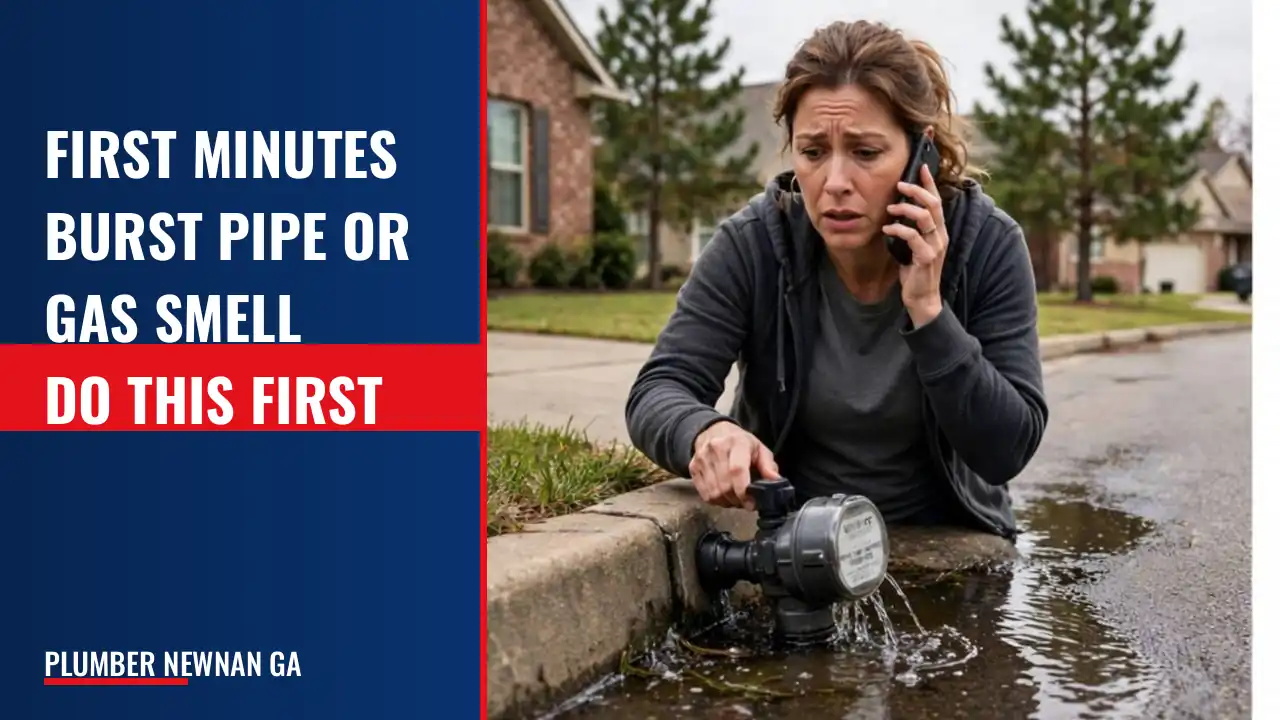
In the first minutes of a burst pipe, shut off the main water valve and cut power to any electrical circuit near the water; for a gas smell, leave the building immediately, do not touch light switches or use a phone inside, and call the gas utility from outside. These two emergencies need opposite first moves: water asks you to stop the flow, gas asks you to get out.
What is happening when a pipe bursts or you smell gas?
A burst pipe releases water under the pressure held in the supply lines, so the leak continues until the main valve closes or the line drains; a gas smell means gas is escaping somewhere between the meter and an appliance, and it can collect in a closed room. Both are plumbing problems, but they behave differently: water damage grows with every minute, while gas creates an ignition risk that water does not.
Water pressure in most homes is enough to push several gallons a minute through a split pipe, which is why shutting the main valve matters more than mopping. Gas is lighter than air and rises, but in a closed house it can pool near the floor and reach a level where a spark, a pilot light or a switch can ignite it. That difference is why the gas answer is to leave, not to investigate.
Why does shutting the main valve or leaving the house work?
Closing the main water valve stops new water from entering the pipes, so the burst section drains and the leak slows to what is already in the walls; leaving the house removes you from the gas concentration and lets you call for help from a safe distance. Neither action fixes the pipe or the gas line, but both remove the thing that makes the emergency worse.
A main valve is usually a lever or a round wheel near where the water line enters the house, often in a basement, utility closet or crawlspace. Turning a lever a quarter turn across the pipe closes it. A wheel valve closes by turning clockwise until it stops. If the valve is stiff or has not been moved in years, it may not close fully, and that is one reason a plumber checks it during routine plumbing repair visits.
What changes the answer for a burst pipe?
The answer changes with where the water is, whether electricity is nearby, and whether the burst is on the supply side or the drain side. A burst supply pipe sprays clean water under pressure and needs the main valve closed at once. A backed-up drain or sewer line releases wastewater that may carry germs, and the first move is to stop using fixtures and keep people away from the mess.
Water near outlets, a panel or an appliance calls for cutting power to that circuit at the breaker before you step into the water. If the burst is in a wall or ceiling and water is pooling near a light fixture, treat the ceiling as unsafe and stay out from under it. A water heater that is leaking from the tank itself is a different case: shut off its power or gas and its cold-water inlet, then let a professional handle the tank, since gas water heater repair and tank replacement are licensed work.
What changes the answer for a gas smell?
The answer changes with how strong the smell is and whether you can smell it outside as well as inside. A faint smell near one appliance might come from a pilot light that went out, but a strong smell, a hiss, or a smell that is also present outdoors means leave immediately and call the gas utility from a neighbour's phone or from the street. Do not re-enter to open windows or shut valves.
Inside, do not flip switches, unplug appliances, use a landline or start a car in an attached garage. Those actions can create a spark. Once you are out, the gas utility is the first call because it controls the meter and can shut gas off at the source; a plumber handles the pipe or appliance after the utility makes the scene safe. The same rule applies to a gas water heater or any gas appliance: the utility first, then the trade.
What can a homeowner safely do, step by step?
A homeowner can safely shut off the water main, cut power to a wet area at the breaker, open windows for a water leak, and leave the house for a gas smell. Anything that involves opening a gas valve, repairing a pipe inside a wall, or working on a gas appliance belongs to a licensed professional.
For a burst pipe, the order is:
1. Shut the main water valve. Turn a lever a quarter turn across the pipe, or a wheel clockwise until it stops.
What should a homeowner not do?
A homeowner should not try to patch a burst pipe under pressure, open a wall to find a gas leak, or relight a gas pilot when the smell is strong. Those actions either fail or create a bigger hazard. A patch held by hand or tape will not hold against house pressure, and searching for a gas leak with a flame or a match is dangerous.
Do not run a shop vacuum or a wet-dry vacuum in standing water near outlets, and do not assume a faint gas smell is harmless because it went away. Gas can build again after the air clears. Do not turn the water main back on to test a repair yourself; a plumber should pressure-test the line first.
It becomes a professional job as soon as the water is inside a wall, under a slab, or the gas smell is inside the building, because those repairs need licensed work and, for gas, utility coordination. A licensed master plumber carries insurance and knows the code requirements for pipe materials, gas connections and pressure testing. A homeowner shutting a valve is maintenance; repairing the pipe is not.
Some bursts come from a frozen line that split during a cold snap, and thawing it safely without cracking more pipe takes care. The service that handles that is explained at plumbers for frozen pipes. A slab leak or a sewer line break needs leak detection or a camera inspection before anyone digs, and those are professional tools. If you are unsure whether the situation is an emergency, this guide helps: call now versus schedule.
How can a homeowner prevent the next burst or gas scare?
A homeowner can prevent many bursts by knowing where the main valve is, exercising it once a year, and insulating exposed pipes before the first freeze. Gas scares are often prevented by having gas appliances serviced and by keeping the area around the meter clear. These are maintenance habits, not repairs.
A water heater is a common source of both water and gas problems. A tank water heater that leaks from the tank body usually needs replacement, while a tankless water heater needs descaling and a gas connection check. Routine checks catch a failing valve or a loose gas fitting before it becomes an emergency. The related guide on getting help right now covers what to say when you call: how do I get help right now for an active leak, backup, or gas smell.
Common questions about burst pipes and gas smells
Here are the questions homeowners ask most often after reading the steps above.
What should a homeowner do in the first minutes of a burst pipe or gas smell before the plumber arrives?
Shut the main water valve for a burst pipe, and leave the building for a gas smell. Those two moves remove the source of the damage or the danger while you wait. Do not try to repair the pipe or find the gas leak yourself.
what is should a homeowner do in the first minutes of a burst pipe or gas smell before plumber arrives?
It is a short emergency checklist: stop the water, cut power near water, leave for gas, and call from a safe place. The checklist is about removing the hazard, not fixing the plumbing. A plumber handles the repair after the hazard is controlled.
how does what should a homeowner do in the first minutes of a burst pipe or gas smell before plumber arrives work?
It works because the main valve stops new water from entering the pipe, and leaving the house removes you from the gas. Both actions buy time and reduce harm. They do not replace the repair, which needs a licensed plumber or the gas utility.
what should I know about a homeowner do in the first minutes of a burst pipe or gas smell before plumber arrives?
Know where your main water valve is and how it turns, and know that a gas smell means leave first and call the utility. Also know that water near electricity means cut the breaker if you can reach it safely. Those three facts cover most of the first minutes.