Quick Answer
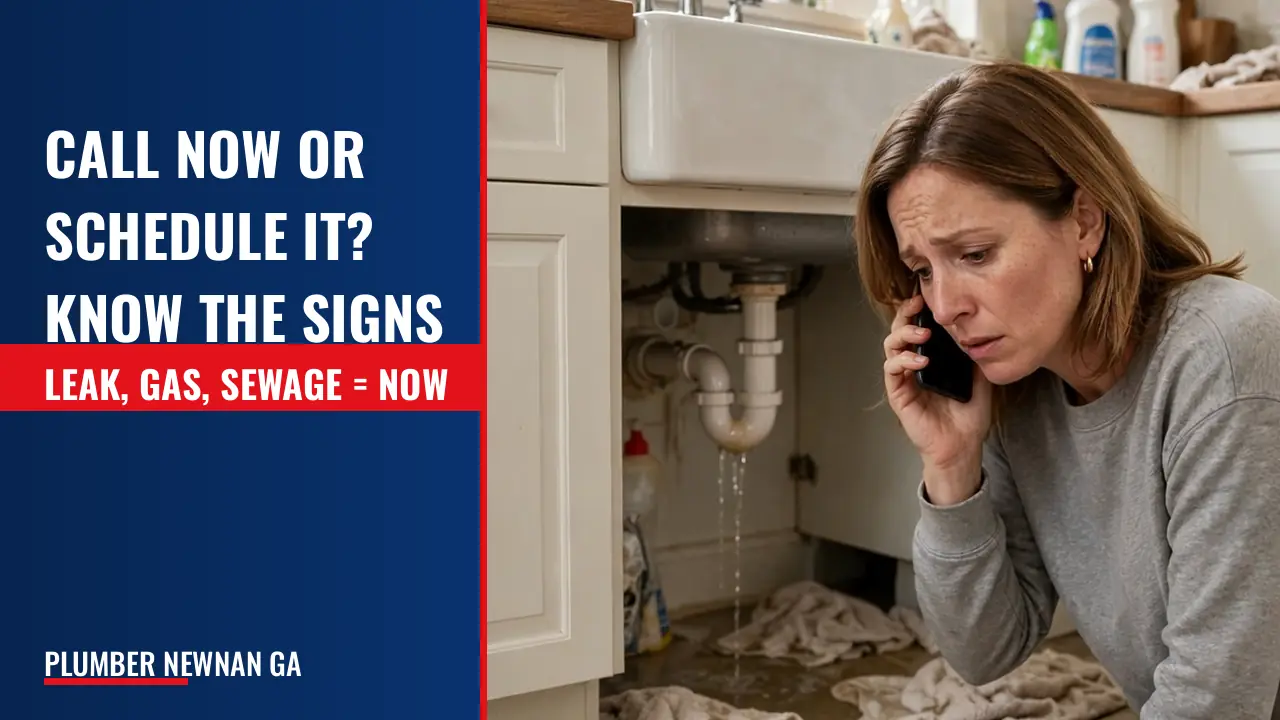
Call now for an active leak you cannot stop, any smell of gas, or sewage backing up into the house. These three are emergencies because water, gas, or waste is already escaping where it should not, and waiting lets the damage spread. For more advice, see our blog.
Schedule for a drip, a slow drain, a running toilet, or a water heater that is merely lukewarm. Those are symptoms: they need a plumber, but the house is not taking on harm by the hour.
What makes a plumbing problem an emergency?
A plumbing problem is an emergency when something is escaping right now and you cannot stop it at the fixture: water soaking into structure, gas in the air, or sewage coming up where people live. The test is not how annoying it is but whether the harm grows while you wait.
Water under pressure finds the path of least resistance, so a pinhole in a supply line can wet a ceiling overnight. Gas has no smell of its own; the rotten-egg odor is added so you can detect it. Sewage carries waste and bacteria, so a backup inside the house is a health problem, not just a mess.
Which symptoms can wait for a scheduled visit?
A symptom can wait when the system is still contained and the harm is not spreading: a faucet that drips, a drain that empties slowly, a toilet that runs now and then, or a water heater that heats but not as well as it used to. These waste water or money, but they do not flood or contaminate the house today.
A slow drain often means a partial clog in the trap or branch line, and a running toilet is usually a worn flapper. Both are plumbing repair jobs that fit a normal appointment. Watch for change: a slow drain that suddenly stops draining, or a drip that becomes a spray, moves into the call-now column.
Why does an active leak demand a call now?
An active leak demands a call now because water keeps moving until the supply is shut off, and the damage it does to drywall, flooring, and framing grows with every hour. A leak you can see is only part of the story; much of the water travels along joists and inside walls before it shows.
Shut the nearest fixture valve first, then the main shutoff if the leak continues. A leak you cannot stop at a valve is the clear emergency; a drip you can catch in a bucket is not. Leak detection finds hidden leaks before they spread, and a camera inspection shows where a pipe has cracked.
Why is a gas smell always a call now?
A gas smell is always a call now because gas can collect and ignite, and you cannot see or smell the danger once it has pooled. Leave the building, do not flip switches or use a phone inside, and call from outside.
A faint smell near a gas water heater or range can still mean a leaking connection. Do not test for the leak with a flame or try to tighten a fitting yourself. The safe move is to get everyone out and let a qualified plumber find and repair the source; see our gas leak repair service.
Why does a sewage backup count as an emergency?
A sewage backup counts as an emergency because waste is entering the living space, and it carries bacteria and pathogens that make people sick. Stop using water in the house: every flush or running tap adds to the backup. Keep children and pets away from the area.
A backup that stays inside one fixture, like a single toilet, may be a local clog that can wait for a normal visit if you stop using that fixture. A backup coming up through a floor drain or tub, or one that affects several fixtures, points to a blocked sewer line and should be treated as urgent.
What should I do first, and what should I not do?
Do shut off the water or gas at the source if you can reach it safely, then move people and valuables away from the area. Do not keep using fixtures that are backing up, do not pour chemical drain cleaner into a fully blocked line, and do not open a gas fitting yourself.
For an active water leak, close the fixture valve, then the main shutoff. For a gas smell, leave and call from outside. For sewage, stop water use and keep the area clear. These steps buy time; they do not replace a plumber.
It becomes a job for a licensed professional when the problem involves gas, a sewer line, or a leak you cannot isolate, because those carry legal, health, or structural risk. A licensed master plumber has the training and insurance to work on them safely.
A plumber can also tell you whether a repair will hold or whether replacement is the better path. For a water heater, for example, a tank that is leaking from the body usually needs replacement, while a failed element may be a repair. That judgment is where experience matters.
How do I prevent the next emergency?
You prevent the next emergency by catching small faults before they grow: fix drips, clear slow drains, and have the water heater and shutoff valves checked. A shutoff valve that will not close is a problem waiting for the day you need it most.
Know where your main water shutoff and gas shutoff are, and show everyone in the house. A short walk-through now saves minutes in a real leak. For a symptom you are unsure about, how do I get help right now for an active leak, backup, or gas smell, and how fast can someone respond? explains what to expect.
Call Now Versus Schedule: Is This an Emergency (Active Leak, Gas Smell, Sewage Backup) Or A Symptom That Can Wait: Questions Answered
Here are the questions homeowners ask most when they are deciding whether to call now or wait.
Call now versus schedule: is this an emergency (active leak, gas smell, sewage backup) or a symptom that can wait?
Call now for an active leak you cannot stop, any gas smell, or sewage backing up inside the house. Schedule for a drip, a slow drain, a running toilet, or a water heater that is merely lukewarm.
What is call now versus schedule: is this an emergency (active leak, gas smell, sewage backup) or a symptom that can wait?
It is a decision rule: an emergency is something escaping right now that you cannot stop, while a symptom is contained and not spreading. The rule helps you choose between an urgent call and a normal appointment.
How does call now versus schedule: is this an emergency (active leak, gas smell, sewage backup) or a symptom that can wait work?
It works by asking whether the harm grows while you wait. Water, gas, or waste that is already escaping grows; a drip or slow drain usually does not. If you can shut it off safely and the harm stops, it can wait.
What should I know about call now versus schedule: is this an emergency (active leak, gas smell, sewage backup) or a symptom that can wait?
Know where your main water and gas shutoffs are, and never treat gas or a sewer backup as a do-it-yourself job. Those need a licensed professional, and a plumber can also tell you whether a repair will hold.