What water filtration is, and when you actually need it
Water filtration is the process of passing your home's water through a filter media that traps sediment, chlorine, or other unwanted particles before the water reaches your taps. You need it when your water carries visible grit, tastes or smells off, stains fixtures, or when your water source or plumbing materials put particles into the supply, as we explain in our blog.
Filtration is not the same as softening. A filter removes physical and chemical contaminants; a softener removes the minerals that cause scale.
How does water filtration work?
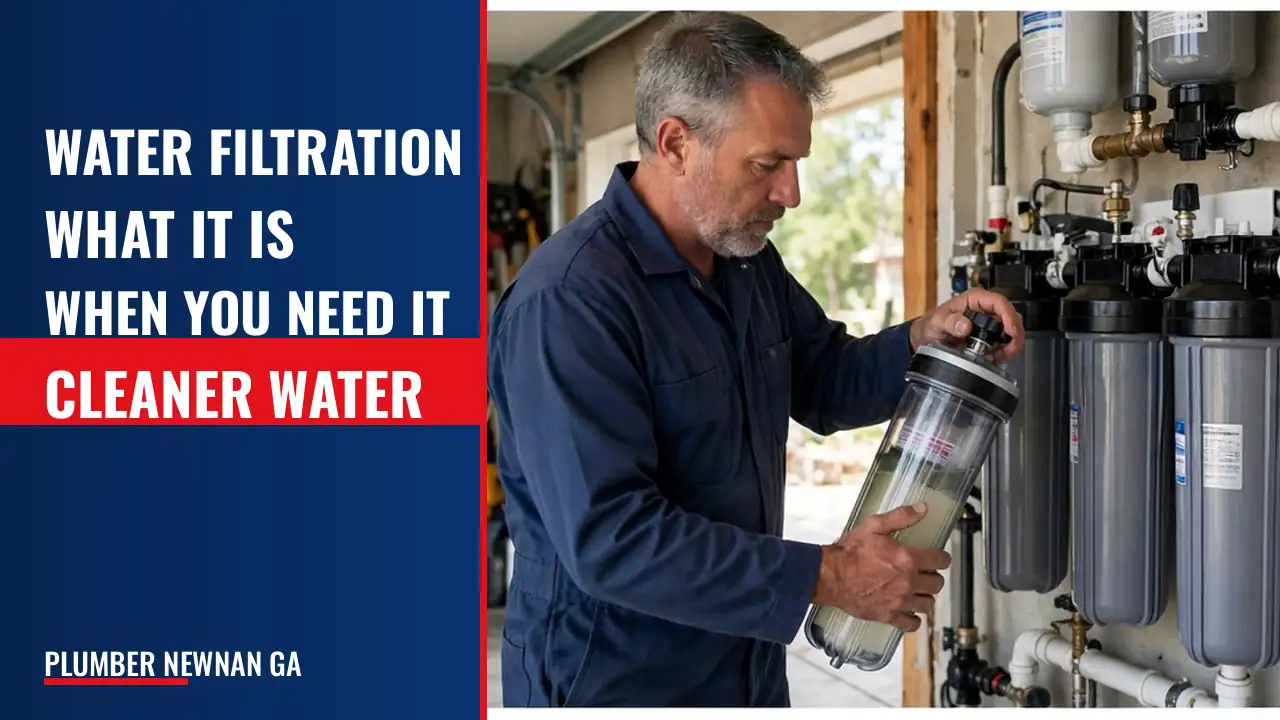
Water filtration works by forcing water through a filter medium whose pores or charged surfaces catch particles larger than the water molecules passing through. A whole-house filter sits on the main line after the meter or pressure tank, so every fixture downstream gets filtered water. A point-of-use filter sits under one sink or on one appliance and treats only that tap, and it is one of the plumbing repair services we offer.
The filter medium decides what gets caught. Sediment filters trap sand, rust and grit. Carbon filters adsorb chlorine, tastes and odors. Some cartridges combine both. The cartridge loads up over time, which is why it has a replacement interval and why a clogged cartridge drops your water pressure.
Filtration does not remove dissolved minerals like calcium and magnesium. That is the job of a water softener, and the two devices are often installed together on the same line. If hardness or recurring scale is your real problem, the decision is different from a filtration decision.
What should I know about water filtration before I choose one?
What you should know first is what is actually in your water, because the right filter depends on the contaminant. A sediment filter will not fix a chlorine taste, and a carbon filter will not fix grit from a failing pipe. Test the water or read your utility's water quality report before buying anything.
Second, know where the filter goes. A whole-house filter protects every tap and appliance but needs space, a bypass, and a cartridge you can reach. An under-sink filter is simpler but leaves showers and the washing machine untreated. Third, know the maintenance: every filter has a cartridge or media bed that must be changed on schedule, or it becomes a restriction and a place for bacteria to grow.
When does water filtration matter most?
Water filtration matters most when the water itself is the problem: visible sediment, a chlorine or sulfur smell, staining, or recurring damage to fixtures and appliances. If your water is clear, tasteless and leaves no deposits, filtration is optional rather than necessary.
Filtration also matters when your plumbing is old. Galvanized steel lines shed rust and grit into the water, and a sediment filter on the main line keeps that debris out of faucet aerators, toilet valves and the water heater. In that case the filter is protecting the plumbing, not just improving the taste.
The answer changes with your source. Municipal water is treated but can still carry chlorine and pipe sediment. Private well water can carry sand, iron and other material that a filter is expected to catch. Test results, not guesswork, tell you which case you are in.
What can I safely do myself, and what should I leave alone?
You can safely change a filter cartridge, flush a sediment filter housing, and check the bypass valve on a whole-house unit, provided you shut off the water and relieve pressure first. You can also read your water report and note what your fixtures are doing.
Do not cut into the main water line, install a whole-house filter or softener without a bypass, or open a pressurized housing you are not sure how to reseat. A housing that is cross-threaded or not fully seated can leak behind a wall or under a cabinet. Anything on the main line or involving soldering, PEX connections or pressure regulation is a job for a licensed plumber.
A simple checklist before you call anyone: note whether the problem is hot, cold or both; whether it appears at one tap or everywhere; whether there is visible grit, color or smell; and when it started. That information shortens the diagnosis.
When does water filtration become a job for a professional?
Water filtration becomes a professional job when the work touches the main water line, the pressure tank, or the water heater connection, or when you cannot identify the contaminant yourself. Those are the points where a mistake causes a leak, a pressure problem or damage to appliances, so contact us before you start.
A licensed plumber can test and interpret the water, size the filter to your flow, install a bypass so you can service the unit without shutting the house down, and check that pressure and flow are correct afterward. Filtration also interacts with other systems: a water heater fed gritty water scales and fails sooner, and a softener downstream of a filter performs differently than one without. If your concern is hardness or recurring scale rather than sediment, the treatment decision belongs with water softener repair and the related guide on whether to add water treatment.
For a wider view of how water quality connects to failures across the house, see the water-quality guide.
Common questions about water filtration
Here are the questions homeowners ask most about filtration, answered plainly.
What is water filtration and when do you need it?
Water filtration is passing water through a medium that traps sediment, chlorine or other particles before it reaches your taps. You need it when your water shows grit, taste, odor or staining, or when old pipes are shedding material into the supply.
How does water filtration work?
A filter cartridge or media bed catches particles as water flows through it, and the cartridge is replaced or cleaned when it loads up. A whole-house unit sits on the main line; a point-of-use unit treats one tap.
What should I know about water filtration?
Know your contaminant first, because the filter must match it. Sediment filters catch grit, carbon filters catch chlorine and odor, and neither removes hardness minerals. Every filter needs scheduled cartridge changes.
When does water filtration matter?
It matters when the water itself carries a problem: visible sediment, smell, staining, or debris from aging pipes. If your water is clear and leaves no deposits, filtration is optional.