What Video Pipe Inspection Is, in Plain Terms
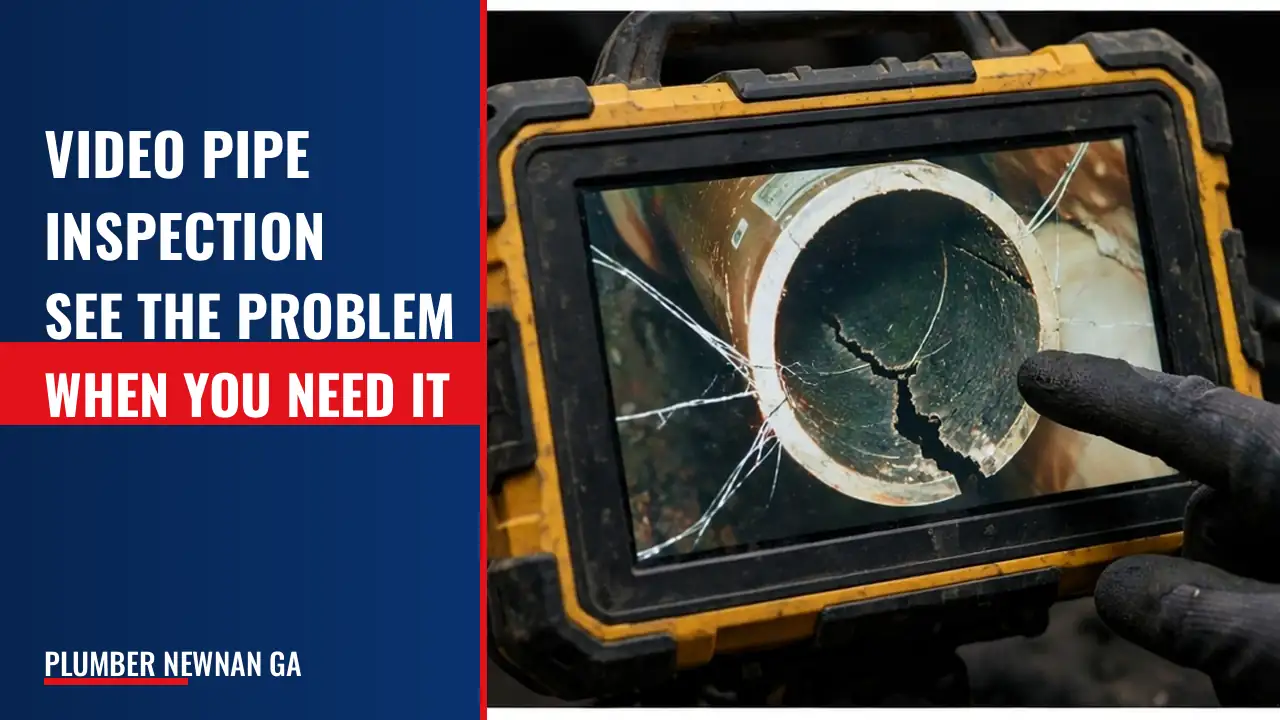
A video pipe inspection is a camera on a flexible cable pushed through a drain or sewer line to show the inside of the pipe on a screen. You need it when a line keeps clogging, when a drain backs up with no obvious cause, or before buying a home or approving a major repair, because it shows the actual condition instead of a guess. For more on drains and repairs, see our blog.
How Does Video Pipe Inspection Work?
Video pipe inspection works by feeding a waterproof camera head through an access point, usually a cleanout, and watching the live feed while measuring how far the camera has traveled. The camera is attached to a stiff but flexible cable, so the operator can steer it around bends and stop it at a suspected problem. Distance markings on the cable tell you where the problem sits relative to the cleanout, which matters when the repair crew has to dig or line the pipe.
A good inspection is more than a glance at the screen. The operator notes cracks, root intrusion, bellies where the pipe has settled, offsets at joints, scale buildup, and any foreign object. In many cases the line is cleaned first, often with drain and sewer cleaning or jetting, so the camera can see the pipe wall instead of a layer of grease or sludge. The output is usually a recording or still images plus a written note of what was seen and where. Ask for that record. It is the difference between a diagnosis and an opinion.
When Do You Need a Video Pipe Inspection?
You need a video pipe inspection when a drain or sewer line is misbehaving in a way that cleaning alone cannot explain. The usual triggers are repeated clogs in the same fixture, slow drains throughout the house, gurgling toilets, sewage odors, a backup that returns after snaking, or a wet or sunken patch in the yard along the sewer route. Each of those points to a condition inside the pipe: roots, a break, a sag, or heavy buildup.
A video pipe inspection is also the standard first step before a big decision. If you are buying a home, a camera look at the sewer line is often the cheapest way to avoid inheriting a collapsed lateral. If a repair has been proposed, the footage shows whether spot repair, trenchless sewer line repair, or full replacement is justified. And if a line has already been repaired, a follow-up inspection confirms the fix is clear and intact.
The inspection is not needed for every clog. A single slow kitchen sink that clears with a plunger or a routine drain cleaning is usually just grease and soap. The camera earns its place when the pattern repeats or when the stakes of guessing are high.
What Should I Know Before the Camera Goes In?
Before a camera goes in, know where your cleanouts are, whether the line has been cleaned recently, and what you want the inspection to answer. A cleanout is a capped access fitting on the drain or sewer line, and the camera needs one to enter. If the only access is a roof vent or a toilet flange, the operator has to remove a fixture or work from the roof, which changes the job.
Expect the line to be cleaned first in many cases. A camera pushed into a grease-packed or root-filled pipe sees the blockage, not the pipe wall, so drain and sewer cleaning often comes before the inspection. That is normal and not an upsell. Ask whether the price covers cleaning, the camera run, and a copy of the findings.
Know what the inspection cannot tell you. It shows the inside of the pipe it travels through, not the water line beside it, the water heater, or the slab. If the symptom is a water leak or a failing water heater, the right first step is leak detection or a water heater inspection, not a sewer camera. The diagnostic methods guide explains how plumbers choose between them.
What Can You Do Yourself, and What Should You Not Do?
You can safely locate cleanouts, note which fixtures back up and when, and keep a simple record of repeated clogs. Write down the date, the fixture, and whether a plunger or snake helped. That pattern tells a plumber more than a single visit can. You can also clear a single slow sink with a plunger and avoid pouring grease down the drain.
Do not push a rented or store-bought camera deep into a sewer line yourself. Consumer cameras are short, hard to steer, and easy to lose in a damaged pipe, and a camera stuck in a lateral turns a diagnosis into a retrieval job. Do not snake a line repeatedly to force a clog through a suspected break, because the cable can damage the pipe further. And do not open a sewer cleanout without eye and hand protection, since the contents are a health hazard.
The line between do-it-yourself and professional is simple: clearing a fixture is homeowner work, and inspecting or repairing the sewer line itself is not. Sewer work also carries legal and safety limits in many areas, so a licensed plumber should handle anything below the cleanout.
When Does Video Pipe Inspection Become a Job for a Professional?
Video pipe inspection becomes a professional job as soon as the camera has to enter a sewer line, a main drain, or any pipe you cannot see. That is partly about the equipment and partly about liability: a licensed plumber carries insurance and can stand behind the finding when a repair decision follows. In most homes the camera run is quick, but interpreting what it shows is the skill, so get in touch with us when it needs a professional.
Call a licensed plumber when a clog returns after snaking, when multiple drains are slow at once, when sewage backs up into the house, or when you smell gas or sewage and cannot find the source. A master plumber on staff can read the footage and connect it to the rest of the system, including the water heater, water lines, and any repiping needs. The plumbing repair overview shows where inspection fits among the other repair services.
If the camera shows a break, root mass, or collapsed section, the repair itself is professional work. Depending on the finding, the fix may be underground pipe repair, pipe repair, or a larger sewer replacement. The inspection is what makes that choice evidence-based rather than a guess.
What Are the Common Mistakes to Avoid?
The most common mistake is skipping the inspection and going straight to a repair or a repeated snake. A clog that keeps coming back is a symptom, and snaking treats the symptom while the cause, such as a cracked pipe or root intrusion, gets worse. The second mistake is accepting a verbal description with no footage or written note, which leaves you unable to compare findings or hold anyone to the diagnosis.
A third mistake is assuming a camera inspection covers the whole plumbing system. It covers the drain or sewer line it travels through. Water heaters, water lines, and fixtures need their own checks. Finally, do not let a line sit after a camera shows a defect. A small crack or offset can become a collapse, and a collapse is a bigger repair than a spot fix.
Video Pipe Inspection: Common Questions Answered
Here are the questions homeowners ask most about camera inspections and when they are worth doing.
What is video pipe inspection and when do you need it?
Video pipe inspection is a camera run through a drain or sewer line to see its condition, and you need it when a clog repeats, a backup has no clear cause, or you are deciding on a major repair or buying a home. It turns a guess into a diagnosis.
How does video pipe inspection and when do you need it work?
The camera travels from a cleanout along the pipe and sends a live image while cable markings show the distance to any defect. You need it when the symptom points to a condition inside the pipe rather than a simple blockage, such as roots, a break, or a sag.
What should I know about video pipe inspection and when do you need it?
Know that the line often needs cleaning first, that you should ask for the footage and a written finding, and that the camera sees only the pipe it travels through. It is worth it when the cost of guessing is high, not for every routine clog.
When does video pipe inspection and do you need it matter?
It matters most before a repair decision, before a home purchase, and after a repair to confirm the fix. In those moments the footage shows whether spot repair, trenchless repair, or replacement is the right call, which protects you from paying for the wrong job.