
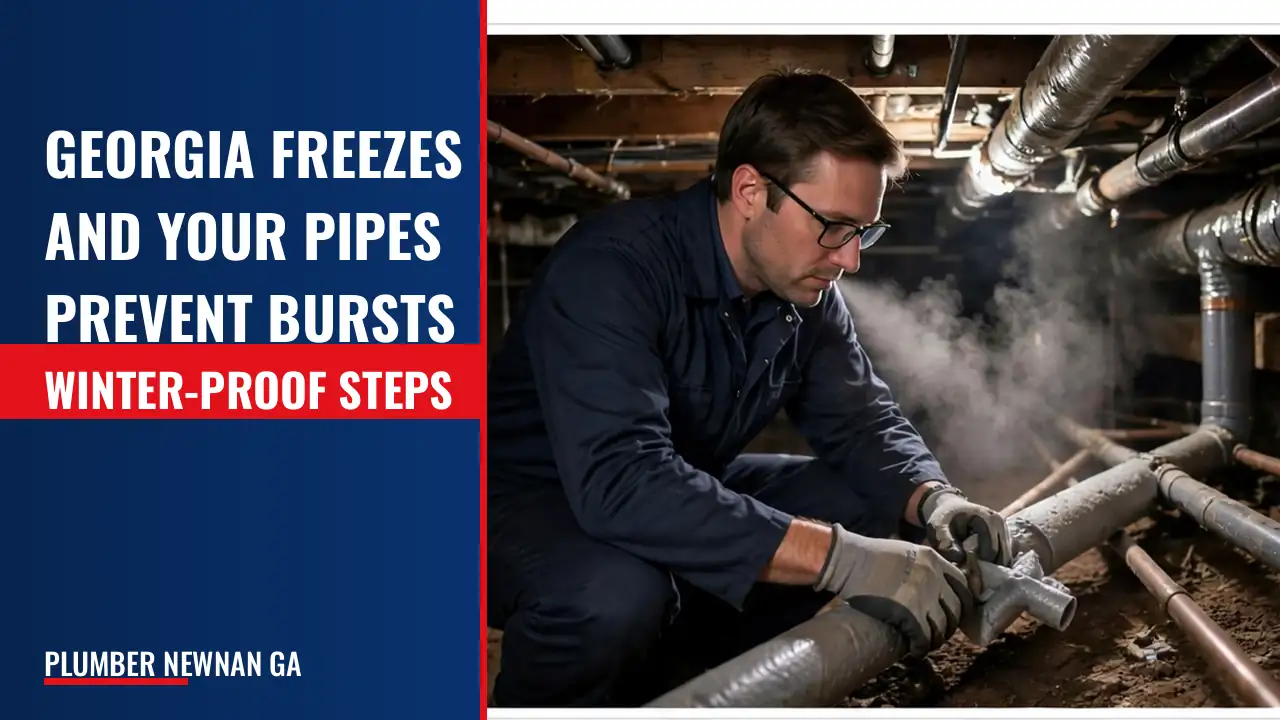
Quick Answer
Seasonal freezes in Georgia affect pipes by freezing the water inside them, which expands and can split the pipe wall or push joints apart. The damage often goes unnoticed until the ice thaws and water escapes, so prevention means keeping pipes warm, keeping water moving, and shutting off the supply before a hard freeze, as we explain in our blog.
Georgia freezes are usually short and shallow compared with northern winters, but that is exactly why pipes here are at risk: plumbing is often installed with less freeze protection, and a single hard night can do the damage that leads to plumbing repair.
How do seasonal freezes in Georgia affect pipes, and what prevention steps reduce risk?
Seasonal freezes in Georgia affect pipes by freezing standing water inside them, and water expands as it turns to ice, so the pressure can crack copper, split PEX, or open a joint that was already weak. The pipe usually fails at the weakest point, which is often a fitting, a valve, or a section exposed to cold air, which is why underground pipe repair often follows a freeze.
The freeze itself is only half the problem. The real damage shows up when the ice melts and water escapes into walls, ceilings, or slab, which is why the first sign is often a stain or a sudden drop in pressure rather than a burst you can see.
What makes a Georgia freeze different from a northern one?
A Georgia freeze is different because it is short, often overnight, and the plumbing here is not built for it. Homes in this region frequently have pipes in vented crawlspaces, exterior walls, garages, and attics, where a few hours below freezing is enough to freeze water in an uninsulated line, and that is where pipe repair calls tend to start.
The ground also matters. In colder climates, water lines are buried below the frost line; in Georgia, the frost line is shallow, so an exposed outdoor spigot or a line near a foundation vent can freeze even when the soil a foot down does not. That is why a brief cold snap can catch homeowners off guard.
Which pipes are most likely to freeze first?
The pipes most likely to freeze first are those with the least protection: outdoor hose bibs, lines running through an unheated garage or crawlspace, pipes on an exterior wall, and any supply line in an attic. These are the places where cold air reaches the pipe directly.
A second group is pipes that carry little water or sit idle, such as a line to a guest bathroom or a sprinkler system. Water that is not moving loses heat faster, so a rarely used fixture can freeze while the rest of the house is fine.
What are the warning signs that a pipe has frozen or is about to?
The warning signs are a faucet that gives only a trickle or nothing at all, a pipe that feels frosty or is visibly bulging, and a faint hissing or dripping sound inside a wall. These signs mean water is blocked or already escaping, and the next step is to shut off the main supply.
A drop in water pressure at one fixture often points to a frozen branch line, while a drop everywhere suggests the problem is at the main or the meter. Do not assume the pipe is fine because it has not burst yet; a frozen pipe can split and only leak once it thaws.
What can a homeowner safely do to prevent freeze damage?
A homeowner can safely prevent most freeze damage by keeping heat in the house, keeping water moving, and cutting the supply before a hard freeze. These steps do not require opening walls or working on gas or electrical parts.
1. Set the thermostat to a steady temperature day and night during a freeze, and open cabinet doors under sinks on exterior walls so warm air reaches the pipes.
2. Let a pencil-thin stream run from the faucet farthest from the main, because moving water resists freezing and gives expanding ice somewhere to go.
What should you not do when a pipe freezes?
You should not pour boiling water on a frozen pipe, force a valve open, or ignore a pipe that has already split. Boiling water can crack a cold pipe, and forcing a valve can break the stem and turn a freeze into a leak.
You also should not run a gas appliance or a space heater in an unvented crawlspace or closet to thaw pipes. That is a carbon monoxide risk, and it is a job for a licensed professional, not a do-it-yourself fix.
When does a frozen pipe become a job for a professional?
A frozen pipe becomes a job for a professional when you cannot find the frozen section, when a pipe has already split or is leaking, or when the freeze involves a water heater, gas line, or sewer line. Those systems carry risks that a homeowner should not take on, so contact us rather than handling it yourself.
A licensed master plumber can locate the freeze with leak detection and video pipe inspection, repair or replace the damaged section, and check that the rest of the system is sound. If the freeze has affected a water heater or a tankless water heater, the repair often involves parts and connections that need a licensed hand.
Freeze damage also tends to reveal older problems, such as a corroded line or a joint that was already failing. A plumber can tell you whether a repair is enough or whether a section should be replaced, and that decision is better made with evidence than guesswork, as our guide to how aging pipe material affects repair versus repipe decisions explains.
How can you reduce risk before the next freeze?
You can reduce risk before the next freeze by walking the house once in fall, insulating and sealing the exposed pipes, and knowing where the main shutoff is. Prevention is mostly about keeping cold air away from water and knowing how to stop the flow if something fails.
Check the crawlspace, garage, attic, and any exterior wall for uninsulated lines, and add pipe insulation or heat tape where it is safe to do so. Seal gaps around pipes where they pass through the wall, and make sure outdoor spigots drain fully.
If your home has a tank water heater in the garage or attic, keep the area around it warm enough to prevent the tank and its lines from freezing. A tankless water heater needs the same attention, because its internal lines can freeze if the power or gas is off during a cold snap.
How Do Seasonal Freezes In Georgia Affect Pipes, And What Prevention Steps Reduce Risk: Questions Answered
Here are the questions homeowners ask most often about freeze damage and prevention.
How do seasonal freezes in Georgia affect pipes, and what prevention steps reduce risk?
Seasonal freezes in Georgia affect pipes by freezing standing water, which expands and can split the pipe or open a joint. Prevention means keeping heat on, letting a faucet drip, insulating exposed lines, and shutting off the main supply before a hard freeze.
What is how do seasonal freezes in georgia affect pipes, and prevention steps reduce risk?
It is the relationship between a short, shallow freeze and plumbing that is often installed with less freeze protection than in colder states. The risk comes from exposed pipes and sudden cold, and the prevention steps are the same ones used anywhere: heat, movement, insulation, and a shutoff.
How does do seasonal freezes in georgia affect pipes, and what prevention steps reduce risk work?
The freeze works by turning water to ice, which expands and stresses the pipe wall and fittings. Prevention works by keeping the pipe above freezing or giving the ice room to expand, so the pressure never reaches the point that splits the pipe.
What should I know about how do seasonal freezes in georgia affect pipes, and prevention steps reduce risk?
You should know that the damage often appears after the thaw, not during the freeze, and that a pipe can split without leaking until the ice melts. Check for slow flow, stains, and hissing after a freeze, and call a licensed plumber if you cannot find the frozen section or see a leak.