
The short answer on pipe material and repair versus repipe
Galvanized steel and polybutylene pipe usually push an aging home toward repiping rather than repeated spot repairs, because both materials fail from the inside out and keep failing after a patch. Copper and PEX are more repairable, so isolated leaks in those materials are often worth fixing, as we explain in our blog.
The decision depends on how much of the system is already failing, how accessible the pipe is, and whether the water damage risk outweighs the cost of replacing runs.
What makes galvanized and polybutylene different from copper and PEX?
Galvanized steel pipe is steel dipped in zinc to slow rust, and polybutylene is a flexible plastic that was used in some homes from the late 1970s into the 1990s. Both materials were common in their eras, and both deteriorate in ways that a single pipe repair cannot reverse.
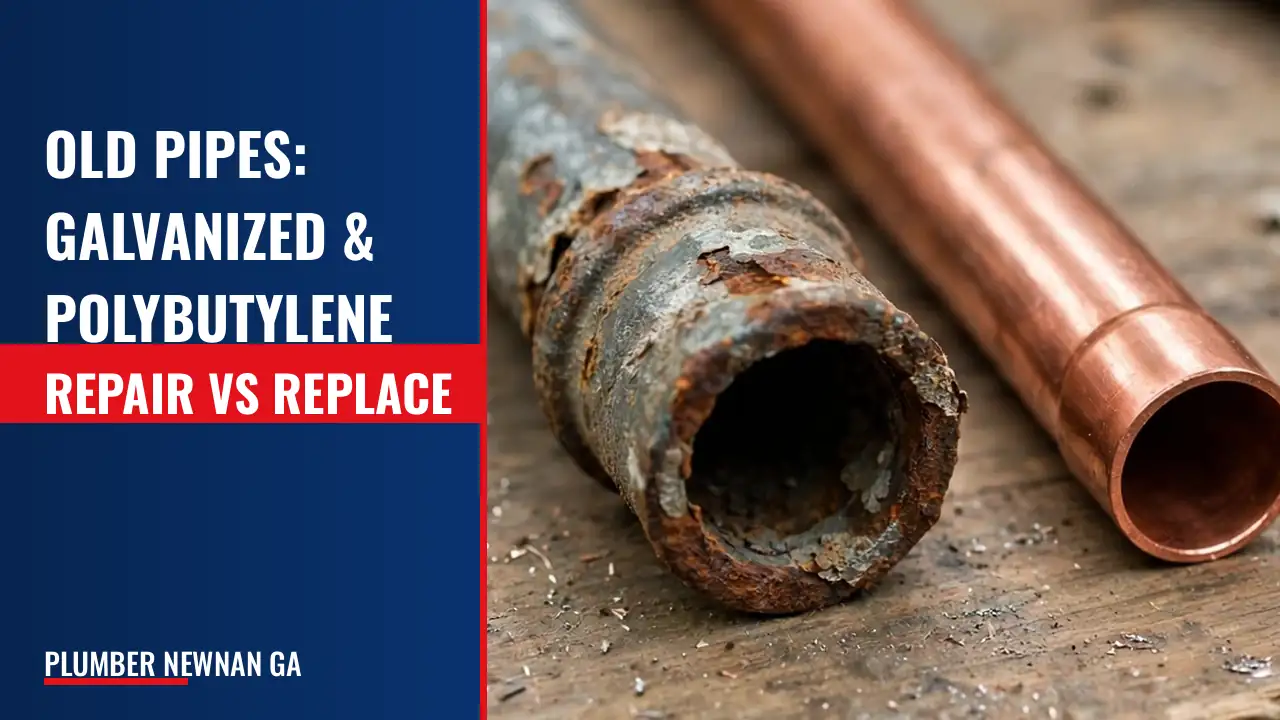
Galvanized pipe rusts from the inside. The zinc coating wears away, the steel corrodes, and the pipe narrows until pressure drops and water turns brown. Polybutylene becomes brittle and can split at fittings or along the pipe, often without warning. Copper and PEX, by contrast, usually fail at joints or from freeze damage rather than throughout the whole run, so a plumbing repair can last.
How does the pipe material change the repair-or-repipe decision?
The material sets the pattern of failure. A material that fails in one spot can be repaired; a material that is failing throughout the system makes each repair a temporary fix on a shrinking pipe.
With galvanized steel, a plumber can cut out a rusted section and splice in new pipe, but the rest of the line is the same age and often just as corroded. Repairs buy time, and in most homes with galvanized pipe the water pressure and flow keep declining. Polybutylene is similar: a repair fixes the leak you can see, but the brittle pipe elsewhere remains a risk. Copper and PEX leaks are usually isolated, so a repair is often the right first move. A camera inspection or leak detection can show how much of the system is affected. For a closer look at how those tools guide the decision, see [diagnostic methods](blog/diagnostic-methods-leak-detection-video-pipe-inspection-hydro-jetting-camera-evidence-are-named-but-never-explained-as-a-decision-step).
What signs tell you the material is failing beyond one repair?
Recurring leaks, falling water pressure, discolored water, and pinhole leaks in different rooms are signs the pipe is failing as a system, not at one joint. These signs matter more than the material name alone.
In galvanized homes, brown or rusty water at the tap and weak flow at upper fixtures often mean the pipe is choked with corrosion. In polybutylene homes, a leak that appears at a fitting after years of service is a warning that other fittings may be close behind. If you have already repaired two or more leaks in a year, the pattern is telling you something. A plumber can confirm with a pressure test or a camera look inside the line. The same logic applies to drains and sewer lines, and the related guide on when repair is [the right choice versus replacement](blog/when-is-repair-the-right-choice-versus-replacement-for-water-heaters-pipes-drains-and-sewer-lines) walks through it.
What can a homeowner safely check before deciding?
A homeowner can identify the pipe material, note where leaks have happened, and record water pressure and discoloration without opening walls or touching the supply line. These observations give a plumber a clearer picture.
Start by looking at exposed pipe in the basement, crawlspace, or at the water heater. Galvanized pipe is gray and magnetic; polybutylene is usually gray or blue plastic with metal fittings. Write down the date and location of each leak you have had. Check water pressure with a screw-on gauge at a hose bib. Do not cut into pipe, solder, or open a wall to inspect; that work risks flooding and is not a do-it-yourself task. If you see active water, shut off the main valve and call a plumber.
It becomes a licensed plumber’s job when the pipe is failing in more than one place, when water is running where you cannot see it, or when the material itself is near the end of its service life.
Repiping involves opening walls, soldering or crimping new lines, and restoring water service, and in many areas a permit and inspection are required. A plumber also has the tools to confirm hidden leaks and to check water pressure after the work. Plumber Newnan serves Newnan, Georgia, and the surrounding areas with repiping and pipe repair, and can tell you whether a repair will hold or whether the material has reached the point where replacement is the sounder choice.
Common questions about aging pipe materials
Here are the questions homeowners ask most often when deciding between a repair and a repipe.
How does an aging home's pipe material, such as galvanized or polybutylene, affect repair versus repipe decisions?
Galvanized and polybutylene pipe usually point toward repiping because both fail throughout the system, not just at one joint. Copper and PEX are more repairable, so isolated leaks in those materials can often be fixed and watched.
What is an aging home's pipe material, such as galvanized or polybutylene, affect repair versus repipe decisions?
It is the way the pipe’s metal or plastic breaks down over time and changes whether a patch will last. The material tells a plumber how widespread the failure is likely to be and whether replacing one section solves the problem or only delays it.
How does an aging home's pipe material, such as galvanized or polybutylene, affect repair versus repipe decisions work?
The material sets the failure pattern, and the pattern sets the choice. A pipe that corrodes or turns brittle from the inside will keep producing leaks, so repairs become temporary; a pipe that fails at a joint can be repaired and left in service.
What should I know about an aging home's pipe material, such as galvanized or polybutylene, affect repair versus repipe decisions?
Know the material, the number of past leaks, and the water pressure before you decide. Those three facts, plus a plumber’s inspection, separate a repair that will hold from a repipe that ends the cycle.