
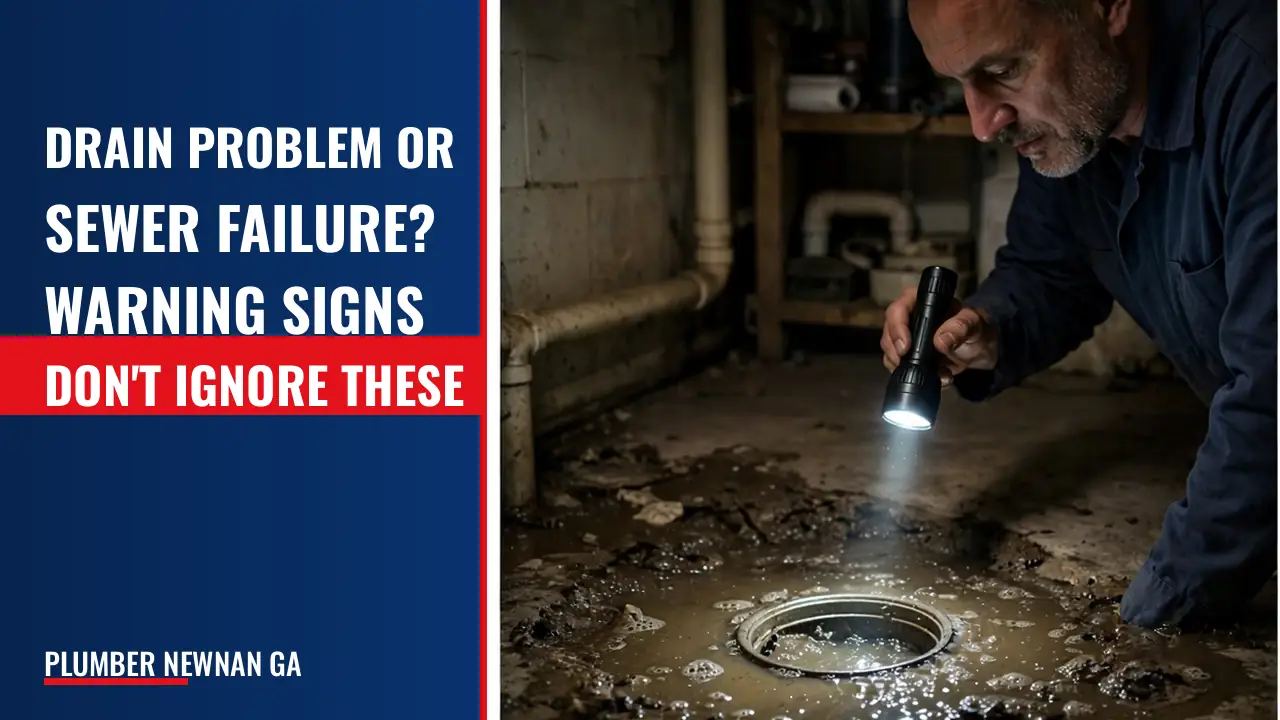
Quick Answer
The clearest signs that a drain problem is a sewer line failure rather than a simple clog are that more than one fixture drains slowly at the same time, that water backs up somewhere other than the fixture you used, and that the problem keeps returning after you clear it. A single slow sink that clears with a plunger is usually a local clog; several slow drains plus gurgling, sewage smells, or wet ground over the line point to the main sewer line.
How does a drain clog differ from a sewer line problem?
A drain clog is a blockage in the pipe close to one fixture, while a sewer line problem is a failure in the main pipe that all the drains share. The drainage system in a home is a tree: small branch pipes from each sink, tub, and toilet join into one main sewer line that runs to the street or septic tank. A clog in a branch affects one fixture; a problem in the main affects everything upstream of it.
This is why location is the first clue. If a single bathroom sink drains slowly but the toilet and tub in the same room are fine, the blockage is probably in that sink's trap or branch. If the toilet gurgles when the sink drains, or water rises in the tub when the washing machine empties, the shared main is involved. A clogged sewer line behaves differently from a clogged drain because the blockage sits downstream of several fixtures at once.
What are the signs a drain problem is a symptom of a deeper sewer line failure rather than a simple clog?
The signs that point to a sewer line failure are multiple slow drains, backups in low fixtures, sewage odor, gurgling, and repeated clogs in the same place. Each one tells you the blockage or break is in the shared main rather than in one branch. The more of these you see together, the stronger the case for a camera inspection of the line.
Watch for these specific patterns:
1. Two or more fixtures drain slowly at the same time, especially on different floors.
Why do these signs happen?
These signs happen because a failing main sewer line changes pressure and flow for every fixture connected to it. When the pipe is partially blocked or broken, water cannot leave fast enough, so it backs up into the lowest opening and air gets pushed through traps, which makes the gurgling sound. Sewage odor comes from gas escaping through a crack or a dry trap.
The usual causes are debris buildup, grease, root intrusion, and pipe damage. Grease and debris narrow the pipe over time. Tree roots find the moisture at a joint or crack and grow into the line. Pipe damage from age, settling soil, or shifting ground creates a place for roots and debris to catch. In older homes, the pipe material itself may be deteriorating. A clogged drain from hair or soap is local; a clogged sewer line from roots or a broken pipe is structural and will return until the pipe is repaired.
What changes whether the problem is serious?
The seriousness depends on what the camera finds: a soft blockage like grease or wipes can often be cleared, while a broken, collapsed, or root-filled pipe needs plumbing repair or replacement. The same symptoms can come from either, so the inspection result is what separates a maintenance job from a construction job.
Several conditions shift the answer. A single slow drain with no other symptoms is usually minor. Backup into the lowest fixture in the house is more urgent because it means the main is blocked. Sewage surfacing in the yard or backing up into a tub is a health issue and should be treated as urgent. Repeated clogs after clearing suggest the pipe is not fully open. The pipe material and age matter too: older clay or cast-iron lines are more prone to cracks and root intrusion than newer plastic. A plumber uses a camera inspection to see the actual condition rather than guess from symptoms.
What can I do myself, and what should I not do?
You can safely check the simple things: confirm which fixtures are affected, look for a cleanout, and try a plunger or a drain snake on a single slow fixture. You should not use chemical drain cleaners repeatedly, and you should not dig up the yard or open a sewer cleanout under pressure.
Safe steps:
1. Write down which drains are slow and when the problem appears. This helps a plumber narrow it down.
When does this become a job for a professional?
It becomes a professional job when the signs point to the main line, when the same clog returns, or when there is sewage backup or odor. A licensed master plumber has the camera and locating equipment to find the failure and the training to repair it safely. Sewer work is not a do-it-yourself task because it involves buried pipe, possible contamination, and in many cases a permit.
A plumber will typically start with a video pipe inspection to see the inside of the line and locate the problem. Depending on what the camera shows, the fix may be sewer line cleaning, drain jetting, trenchless sewer line repair, or sewer line replacement. Trenchless methods can replace or repair a line with less digging when the pipe condition allows it. If the problem is a simple clog in a branch, the plumber may only need to clear it. For related symptoms that need immediate attention, see what symptoms indicate a plumbing problem and which ones mean I should stop and call immediately. For the repair-versus-replace decision, read when is repair the right choice versus replacement for water heaters, pipes, drains, and sewer lines.
What Are The Signs A Drain Problem Is A Symptom Of A Deeper Sewer Line Failure Rather Than A Simple Clog: Questions Answered
Here are the questions homeowners ask most about telling a simple clog from a sewer line problem.
What are the signs a drain problem is a symptom of a deeper sewer line failure rather than a simple clog?
Multiple slow drains, backups in the lowest fixture, gurgling toilets, sewage odor, and clogs that return after clearing are the main signs. A single slow sink with no other symptoms is usually a local clog, while two or more of these together point to the main sewer line.
Can I fix signs a drain problem is a symptom of a deeper sewer line failure rather than a simple clog myself?
No, not the sewer line itself. You can clear a single branch clog with a plunger or hand snake, but a main line problem needs a camera inspection and usually a licensed plumber. Digging or rodding the main without the right tools can damage the pipe and make the repair larger.
How serious can signs a drain problem is a symptom of a deeper sewer line failure rather than a simple clog be?
It can be serious. A broken or root-filled sewer line can cause sewage backup into the home, wet or contaminated ground, and further pipe collapse if left alone. The camera inspection tells you whether it is a maintenance clog or a structural failure that needs repair.
How long does it take to fix signs a drain problem is a symptom of a deeper sewer line failure rather than a simple clog?
It depends on the cause. Clearing a clogged sewer line often takes a short visit, while a trenchless repair or sewer line replacement can take a day or more depending on length, depth, and access. The inspection result is what sets the timeline.